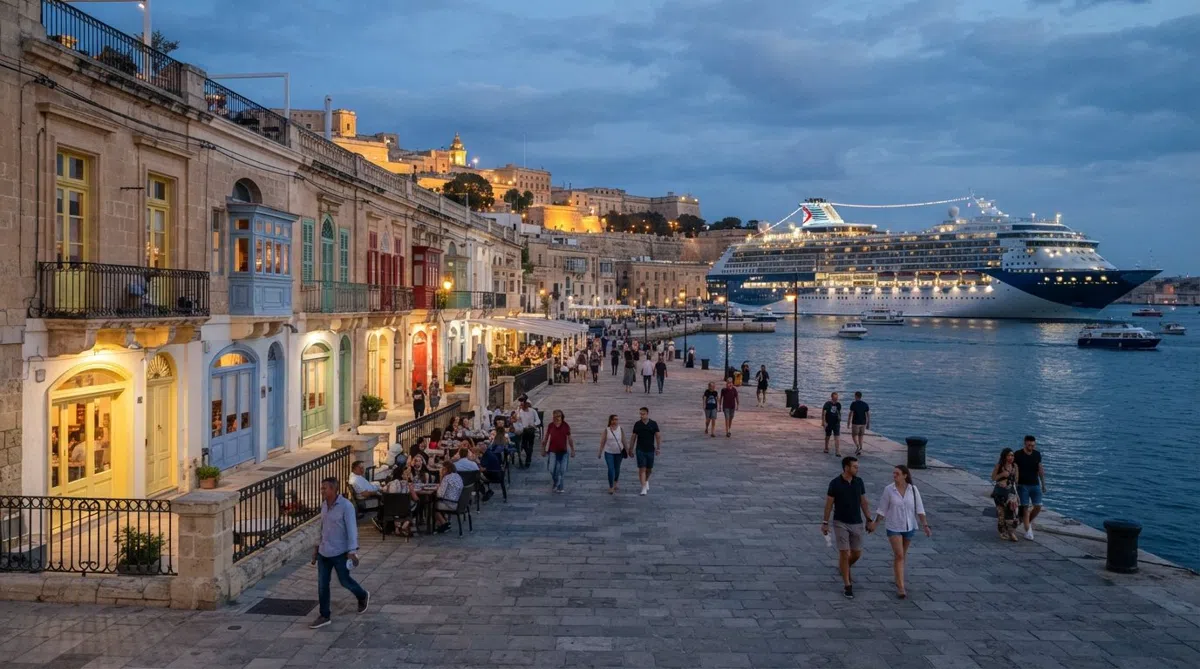

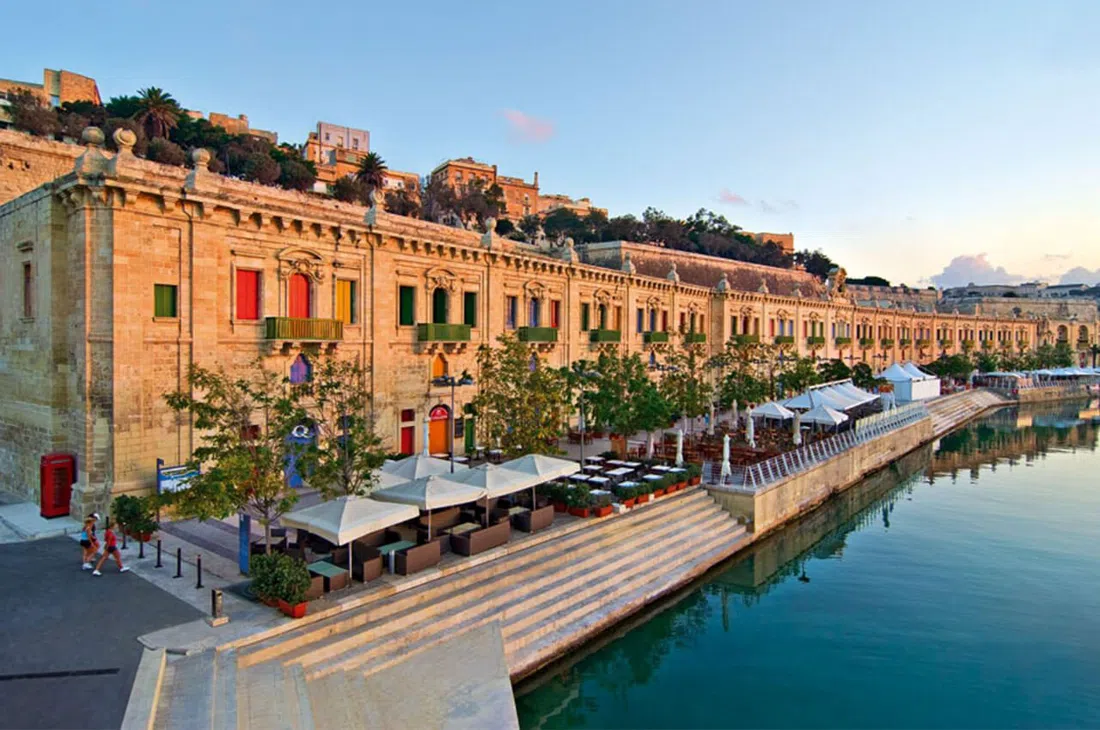
A ship berths at Pinto Wharf before breakfast, and for the next two hours the quay belongs to the coaches: parties forming under a raised umbrella, engines running by the terminal doors, a slow one-directional river of people along the front of the warehouses. Come back at half past four, once the last excursion has loaded, and the same stretch of stone is a promenade again. Painted doors, a chapel with its lamp lit, water slapping the quay wall, nobody standing between you and it. Walking it costs nothing in either version. The difference is when you arrive and which end you start from.
What you are actually looking at
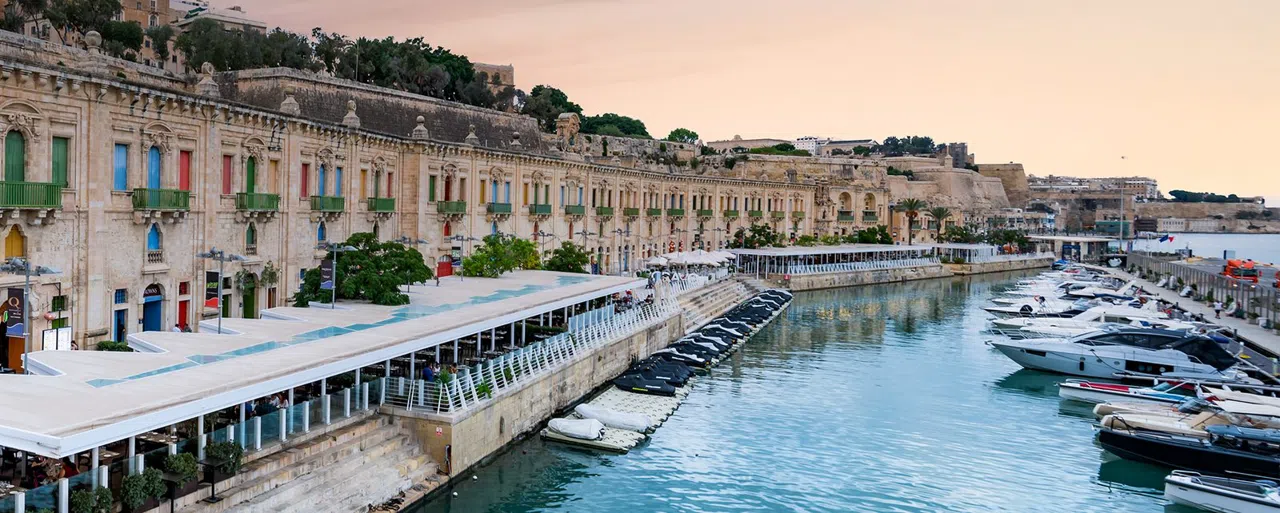
Valletta Waterfront (the Pinto Stores promenade, Floriana) is one long curved terrace of stone warehouses facing the harbour, and that row is the whole attraction. The stores were built in 1752 under Grand Master Pinto, with the design attributed to Andrea Belli, and they were working buildings: cargo came off the boats and went straight in through the doors. The colours on those doors were not decoration. Blue meant fish behind it, green produce, yellow wheat, red wine; it was a code a porter could read faster than a manifest. The row is a Grade 1 scheduled monument now, restored into the face of the cruise terminal, so behind those same doors you find restaurants, bars and a few shops.
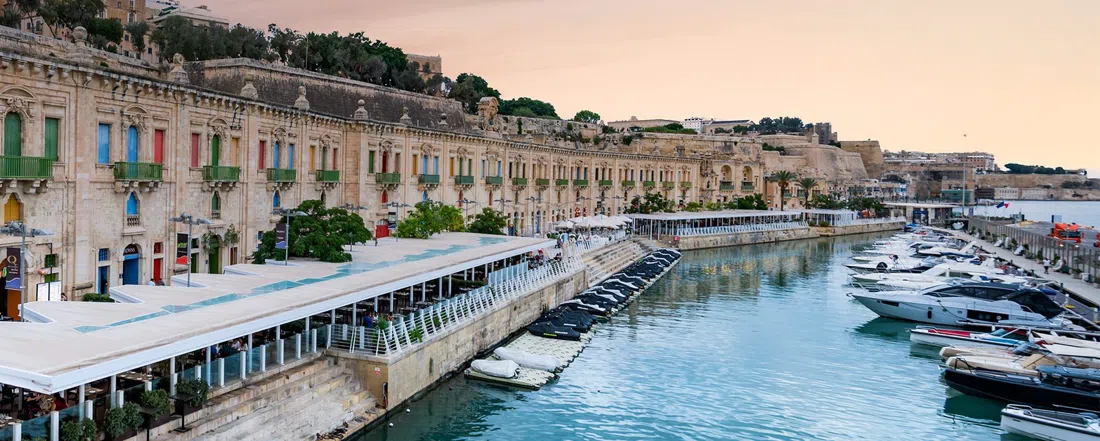
That shapes what a visit is. This is a monument in retail use, not a museum. There is no ticket, no route, no interpretation panel every twenty metres. You walk a flat promenade of a few hundred metres, look up at eighteenth-century masonry, look across at the harbour, and then decide whether you are eating, drinking or moving on. Taken that way it is a pleasant forty minutes. Taken as a half-day attraction on its own, it will disappoint you.
The promenade is free and public. There is no door policy anywhere on the quay itself, and no closing time on the walk: the restaurants set their own hours, the stone does not. Coach and shore-excursion groups arrive constantly through the middle of the day, and that pattern shapes everything below.
The two stops that give the row some weight
Most people walk the length of the wharf, photograph the doors and sit down to eat. Two things on the terrace deserve a proper stop.
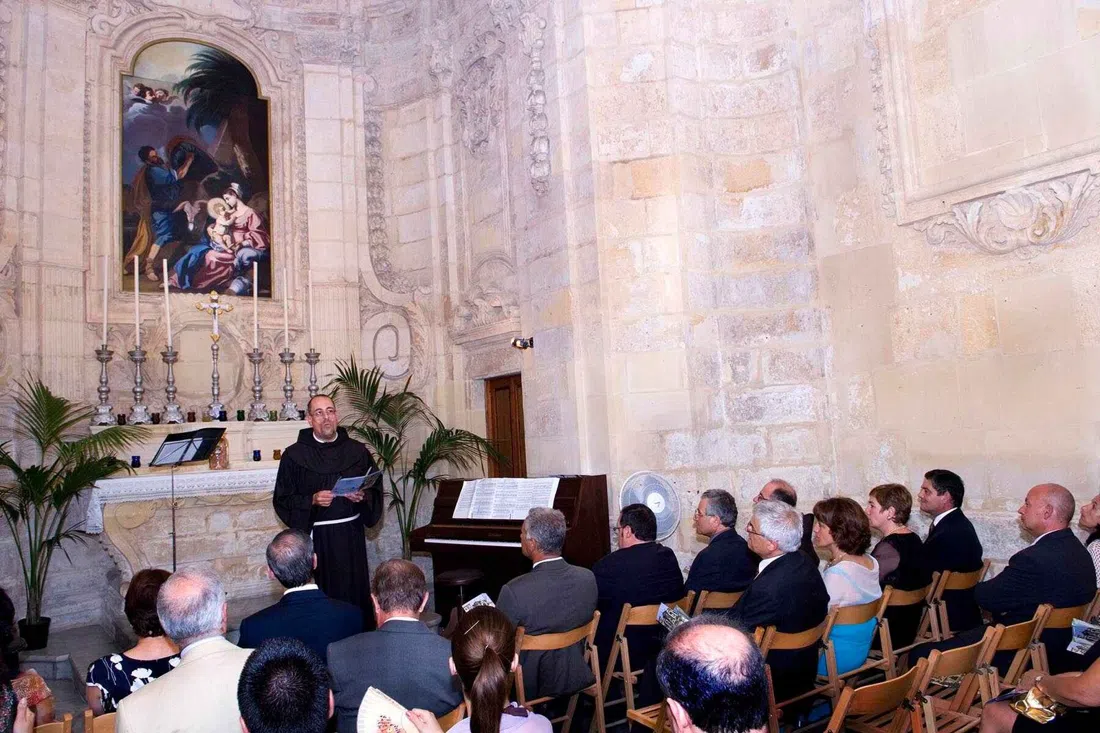
The Chapel of the Flight into Egypt (Pinto Stores terrace, Floriana) is the one genuinely old, genuinely quiet thing on the wharf, built for the men who worked the stores, and the symmetry of the whole terrace is arranged around it. It is open for quiet visits, with a Saturday-evening Mass. It is a working chapel rather than an exhibit, and that distinction matters if you are with a group: look, don't settle in, and don't treat a Mass in progress as part of the itinerary. Entry is free.
The Child Migrants' Memorial (Valletta Waterfront, Floriana) stands outdoors and unenclosed, so there is no restriction and nothing to pay. It commemorates the 310 Maltese children shipped abroad between 1950 and 1965. Two minutes in front of it changes the character of the visit. It gives this quay some weight instead of pure retail, and it is easy to walk past without noticing.
Where to solve practical problems
The Valletta Cruise Port — Forni Cruise Passenger Terminal (at the promenade's inland end) is the building to use when something needs sorting. A tourist information office, Wi-Fi, a pharmacy, baggage services, currency exchange, wheelchair assistance and tax refunds are all here. Transit is free; parking, left luggage and currency are the paid extras. It is also the muster point for organised excursions and where the coaches load, which is useful whether you are trying to find your party or trying to avoid one.

Up to the city without the climb
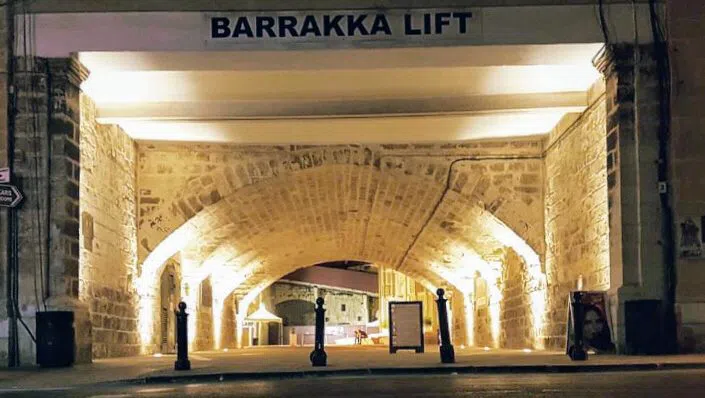
The most useful thing anywhere on this wharf is the Barrakka Lift (Lascaris Wharf, at the foot of the bastions). It carries 21 people per cabin and roughly 800 an hour, and the ride takes about 25 seconds, which turns the long hot walk up Crucifix Hill into nothing at all and puts you on the parapet at the top. A return on the same day is €1; it is free with a personalised Tal-Linja card, and it is included with a valid ferry ticket used the same day. It copes with groups easily, but the queue does build in the twenty minutes after a ship disembarks, so if you arrive into a crowd, walk the promenade first and ride up later.
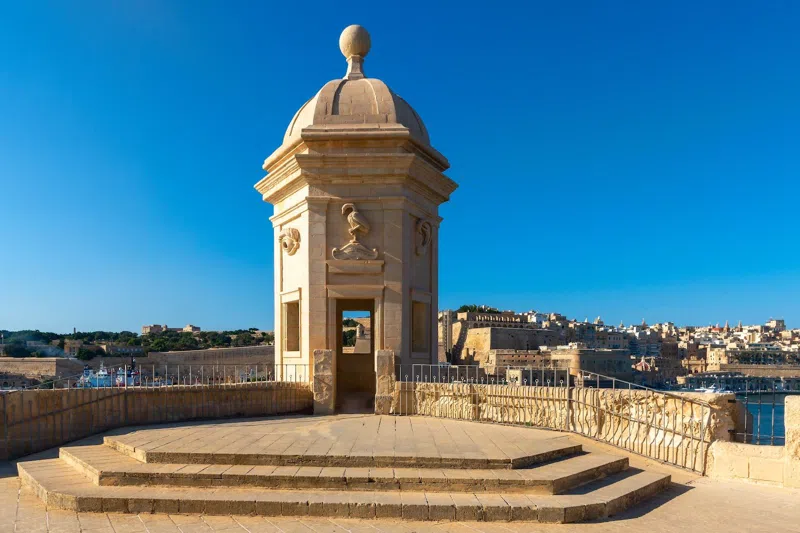
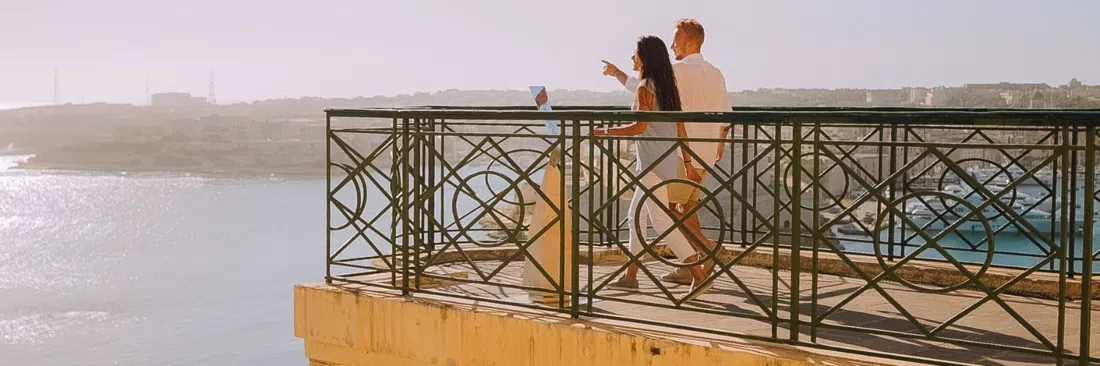
The lift lands you at Upper Barrakka Gardens (on the bastions above the wharf), which is free, open daily from roughly 07:00 to 22:00, and needs no booking. This is the best free view of the harbour on the island, and it is also where everyone else goes. The terrace rail gets three-deep before the noon gun. Come before 11:30 or after 12:30 and the parapet is effectively yours.
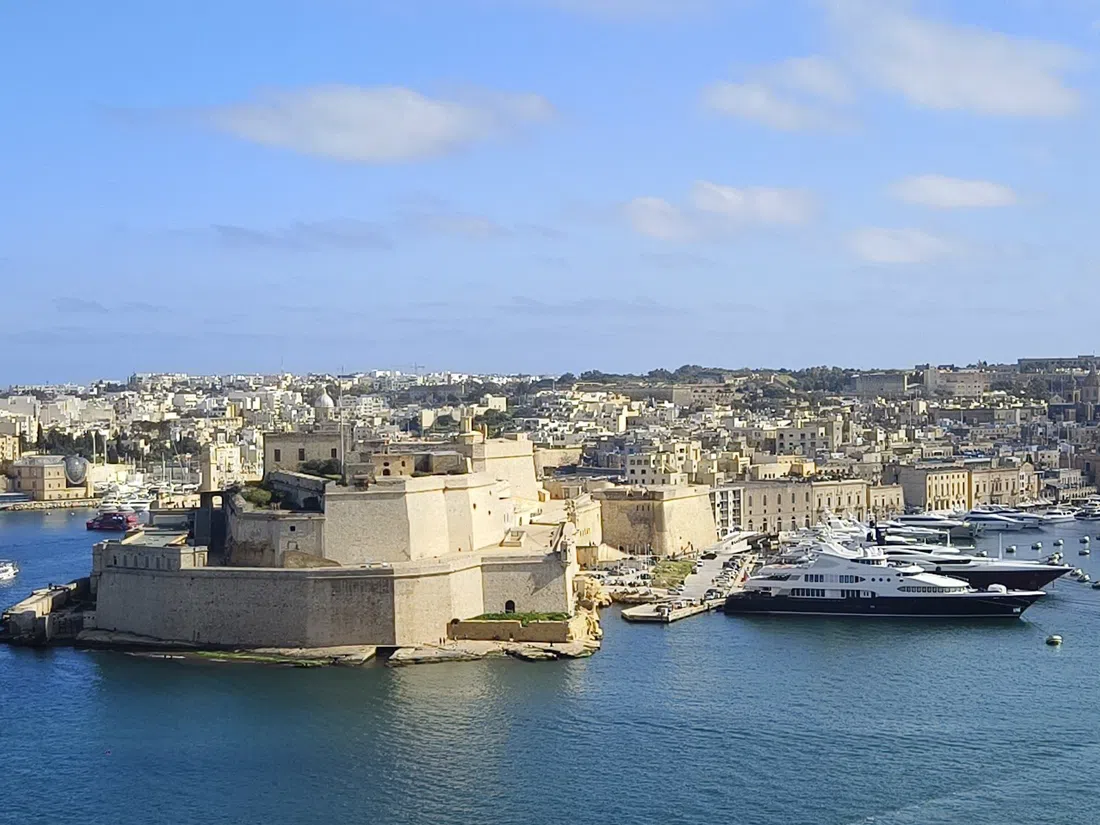
Underneath the gardens, the Saluting Battery (below the Upper Barrakka parapet) is the paid version of the same view. The battery was restored by Fondazzjoni Wirt Artna and the gun is fired at 12:00 and 16:00 Monday to Saturday. Adults are €6, children aged 5 to 15 are €3, a family ticket is €15 and under-5s go free; the site is cashless, card only. Guided visits come with multilingual audio-guides and it takes organised parties without fuss. You are paying to stand on the battery with the guns rather than crane over a rail with everyone else pressed in behind you.
Underground, and across the water
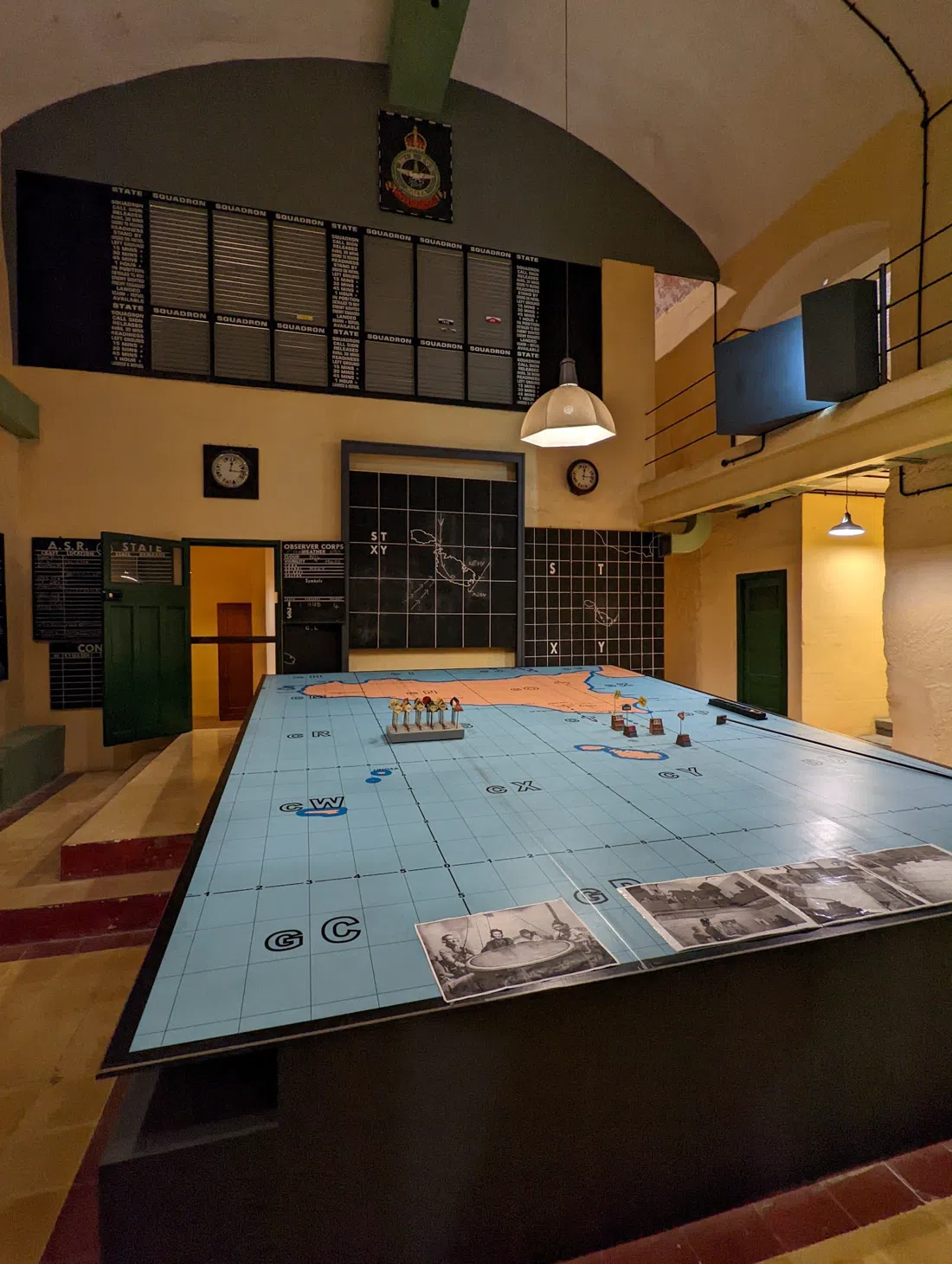
If you want a museum on this walk, make it the Lascaris War Rooms (cut into the rock beneath the bastions). Guided tours run daily at set times, the venue is cashless, and groups should book online. Adults are €20, seniors €19, children 5 to 15 are €7 and a family ticket is €35; the guided tour option runs at around €17 per person. It is closed on Sundays and selected public holidays, and last entry is 16:00, which rules it out for anyone on a late-afternoon call. The maritime museum across the harbour is closed for a major redevelopment, so do not build an afternoon around it.
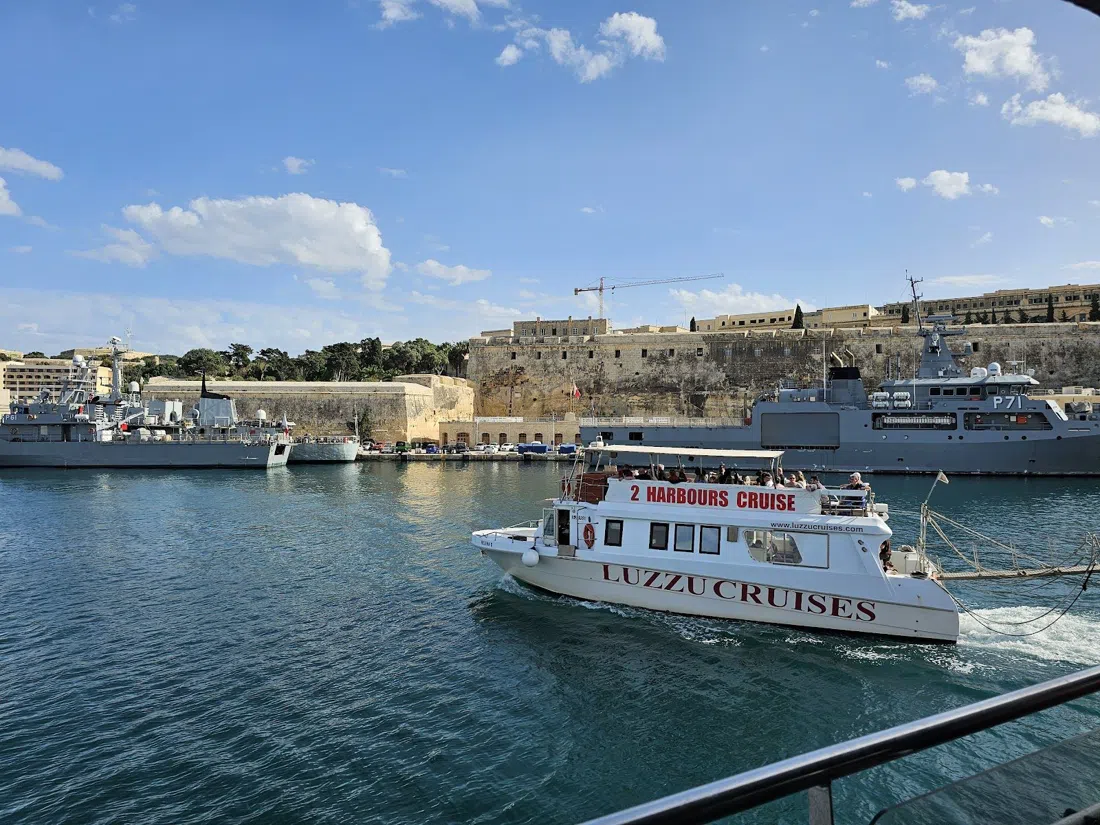
For water instead of rock, Valletta Ferry Services run the Three Cities crossing from Lascaris Wharf, half-hourly, walk-on, no booking, and they absorb groups without complaint. An adult single is €1.50 and a return €2.80, with higher night fares. It is the cheapest harbour cruise in Malta by a distance, a few minutes each way with the bastions rising on both sides, and the same ticket covers the Barrakka Lift that day, which effectively makes the lift free if you sequence it properly.

Grand Harbour Tours Malta (Koperattiva tal-Barklori, at the wharf steps) is the boatmen's own cooperative rather than a resold product. A crossing runs roughly €2 to €3 per person and a short harbour tour around €8 per person, cash on the spot. The boats are small, so a group of ten splits across several of them; private charters and special occasions are arranged directly with the cooperative. What you get for the €8 is the one angle the Barrakka view cannot give you: under the bastions at water level, looking up.
Eating behind the doors
The restaurants occupy the vaults, and they are honest about who they are for.
Hard Rock Cafe Malta (Valletta Waterfront, Floriana) is purpose-built for large parties and is the default answer when a mixed family cannot agree. The bar opens at 09:30 and the kitchen from 11:30, running to midnight on Friday and Saturday; mains are roughly €18 to €30. Nobody will call it local, but passengers on a clock generally want no surprises, and this delivers exactly that.
Vinomad (Valletta Waterfront, Floriana) is the most distinctive room on the wharf: over 100 wines by the glass on self-pour machines, charged to a card, with pours from small tasting measures upward. That system suits a group grazing at different paces, and it is a genuine reason to stay after the ship's crowd thins. Book ahead for the vault at dinner.
Bistro 516 (Valletta Waterfront, Floriana) has the best of the view seats. Homemade pasta, fish and meat, with gluten-free and vegetarian handled on request, mains around €16 to €28. The outside tables are the prize, so reserve rather than turning up and hoping.
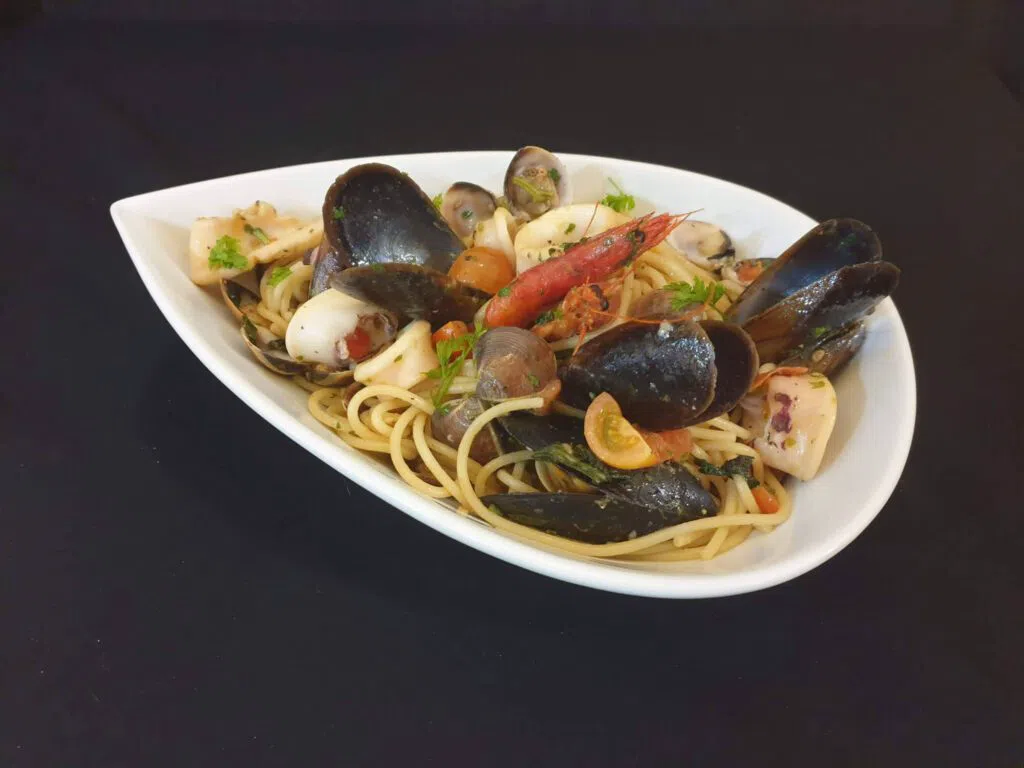
Ta' Detta Restaurant (Valletta Waterfront, Floriana) is the one here that actually cooks Maltese rather than international-for-cruisers. It is family-run and has a private, fully equipped function room, which makes it the sensible choice for a party of eight or more; mains run about €16 to €28.
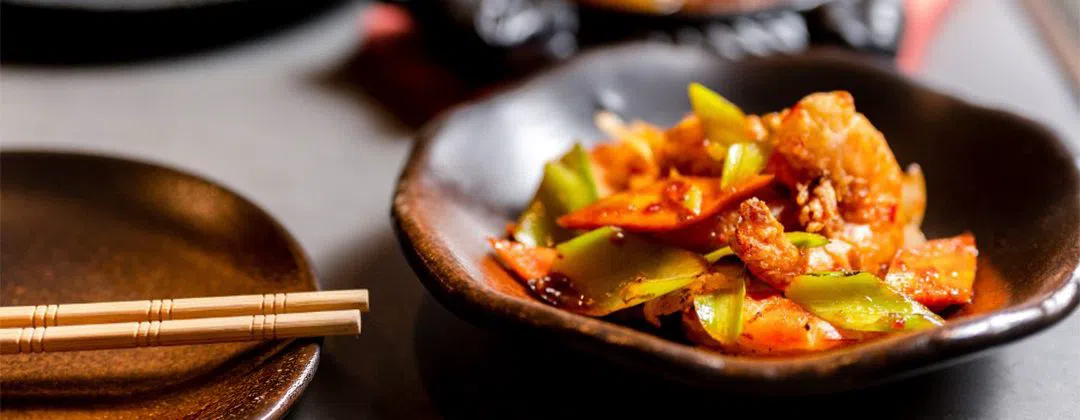
Hi Sushi Malta (Valletta Waterfront, Floriana) is the counterweight on a terrace that otherwise runs Italian, Maltese and American. Counter seating plus tables, plates from a few euro with sets higher, and larger parties are better at the tables. Book at peak.
Ten minutes uphill when the quay is full
If you arrive to find a ship has just emptied onto the promenade, walk away from it. Argotti Botanic Gardens & Resource Centre (Floriana) is about ten minutes uphill, the public areas are free and open, and it is shade and nobody. The University of Malta section is by appointment, and guided tours run occasionally for around €5. Give it thirty minutes and come back down when the coaches have gone.
How long it takes
The promenade itself is forty minutes at an unhurried pace, including both stops worth making. Add the lift and the gardens and you are at an hour and a quarter. Add the Saluting Battery for a firing, or the ferry across and straight back, and it becomes a half-day without ever feeling stretched. The War Rooms are the one thing here that demands proper time; treat that as its own outing rather than a bolt-on.
Best time to go
Early morning and late afternoon are the two good windows, and they are good for different reasons. Before about 09:30 the light is on the bastions across the water, the restaurants are only just opening their bars, and the promenade is nearly empty. After roughly 16:30 the excursions have loaded, the terrace turns residential-feeling, and the wine bar is doing what it is actually for.
The window to plan around is 11:00 to 13:00. That is when parties muster at the terminal, when the lift queue is longest and when the parapet above goes three-deep before the noon gun. If you want the gun, pay for the battery and be down there in good time; if you only want the view, take the lift at 10:30 or wait until 12:30.
Weekdays and weekends differ less than you would expect, since the pattern follows berthing rather than the calendar, but note the gun does not fire on Sundays, the War Rooms are closed on Sundays and selected public holidays, and the chapel has its Mass on Saturday evening. Nothing here needs a particular season. The walk is flat and exposed, so in high summer take the early window for shade rather than for quiet.
At the door or booked ahead
Almost everything on this page is walk-up. The promenade, the chapel, the memorial, the gardens and the lift need no planning at all, and the ferry is turn-up-and-ride. The battery sells at the door and is card only. The War Rooms run set tour times and ask groups to book online, so check the timetable before you commit an afternoon to it. Restaurant tables, especially outside ones and the vault at dinner, are the real booking bottleneck on a busy quay.
Guided options exist if you would rather hand the day to a driver, and they are attached to this page separately. Two things are worth knowing before you compare them with doing it yourself. Departures run seven days a week, so the day of the week is rarely the constraint; but specific dates do go. The top option is already fully booked on 23, 25, 27 and 30 September 2026 and on 1 and 2 October 2026 (those dates only, with others still open). Prices for that private option start from 325 USD per person, which is a different order of spending from the €1 lift and €1.50 ferry that cover most of what is described above.
Is it worth it
As a destination in its own right, no: you would not cross the island for a row of shopfronts. As the first or last hour of a harbour day, yes, comfortably. The wharf gives you an eighteenth-century working quay you can read at a glance, two stops with genuine substance, and a lift that removes the worst climb in the city for a euro. That is a good return on a free walk.
It suits couples best in the two quiet windows, and groups best in the middle of the day when the terrace is built for exactly that kind of traffic. Anyone arriving by sea with four hours and no appetite for a coach will get on with it, and so will families, because everything is flat, open and unticketed. History-minded travellers get least from the wharf itself and most from underground, in the War Rooms. If you are based on the other side of the island and building a day around this, pair it with the St Julian's guide so the afternoon has somewhere to land.
Practical notes
Getting here from St Julian's, the buses to the Valletta terminus run frequently through the day and drop you above the wharf; from the terminus you walk down, or you use the lift in reverse at the end. By road, allow longer than the map suggests in the morning and evening peaks, and use the terminal's paid parking rather than hunting the quay. If you are staying over for an early start, the St Julian's hotel search is the place to begin.
On money: carry a card and some cash. The Saluting Battery and the War Rooms are cashless, card only. The boatmen's cooperative is the reverse, cash on the spot, roughly €2 to €3 for a crossing and around €8 for a short harbour tour. Currency exchange is available in the terminal if you arrive with none.
On timing: the two hours after a ship docks are the ones to avoid, and the promenade is at its best before 09:30 and after 16:30. Last entry to the War Rooms is 16:00, the gun fires at 12:00 and 16:00 Monday to Saturday, and the gardens above are open daily from roughly 07:00 to 22:00.
On budget: a walker spends nothing. A realistic self-guided half-day is about €1 for the lift, €2.80 for a ferry return, €6 for the battery and €16 to €30 for a meal, so call it €30 a head with lunch, or €50 if you add the War Rooms. The guided alternatives start far higher, and for a flat promenade with a lift at one end, the do-it-yourself version is the honest recommendation.