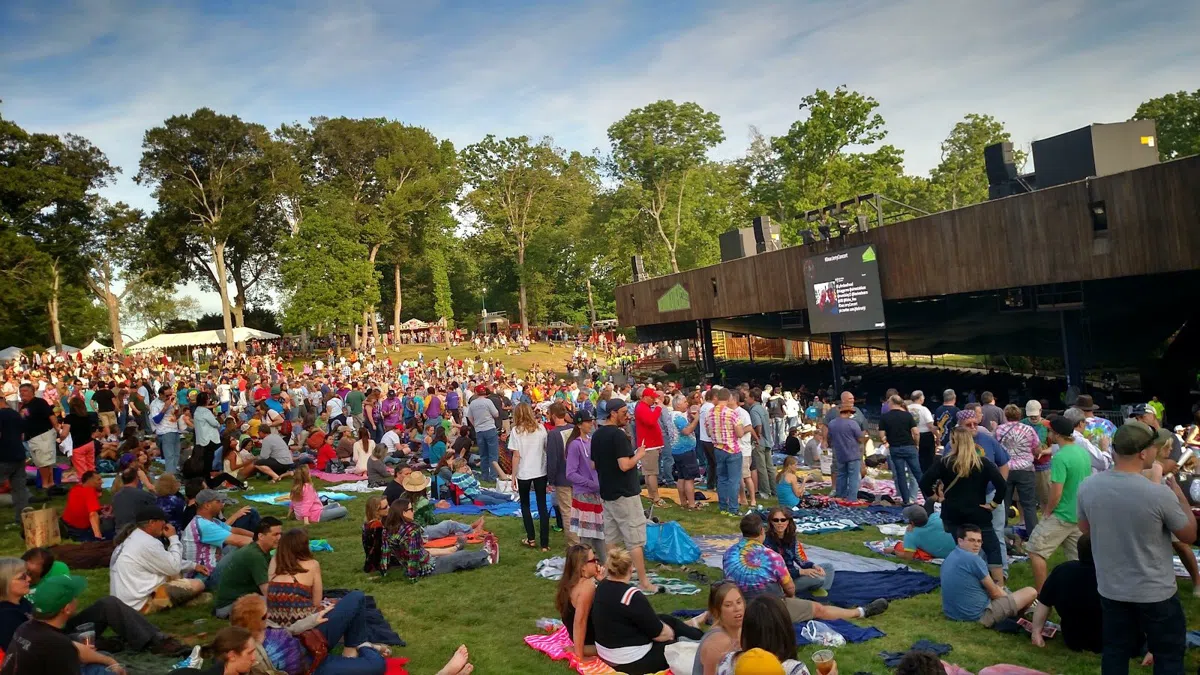
The last weekend of August is the only one all year when the streets behind the parish church matter more than the waterfront. Trestle tables go up along the kerb, the band club tips its kitchen out onto the pavement, and on the Sunday a man in shorts walks a greased pole out over Spinola Bay while a few hundred people eat nougat and wait for him to fall in. In 2026 the feast landed on Sunday 30 August; I went back through the same streets in September to eat everything again sitting down, slowly, and to check which kitchens hold up once the bunting comes off.
How the three days are shaped
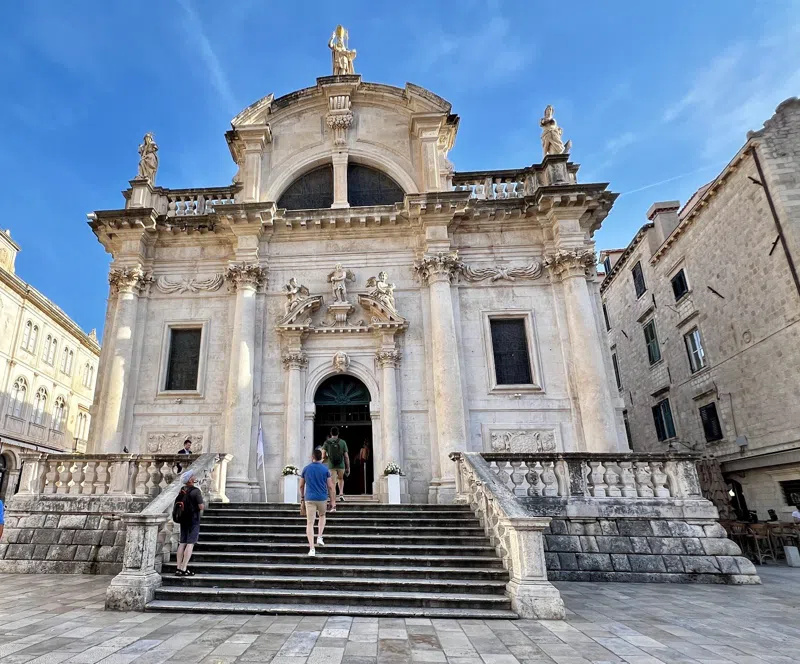
The whole thing is organised around Il-Knisja Parrokkjali ta' San Ġiljan (St Julian's Parish Church), up the hill a couple of minutes behind Spinola Bay. It is free and open to all, with no door policy of any kind: you can walk in mid-rehearsal and nobody will look up. Friday and Saturday are the build: band marches through the side streets, the facade lit, families setting chairs out on their own doorsteps at around nine at night and staying there until two.
Sunday is the day everything happens. In the morning and again around midday the musketterija goes off from the church roof, volleys of black powder fired in sequence, loud enough that you feel it in the sternum from three streets away. In the afternoon the ġostra goes up over the water: a greased pole angled out from the quay with flags at the end, and a queue of young men who climb it, slip, and go into Spinola Bay to applause. The statue comes out at 7pm and the procession fills the streets completely.
One practical point above all the others: be in position before 7pm, not during. Once the procession starts the side streets are shoulder-to-shoulder and you cannot move upstream through them with a group, a pram, or a plate. Come up for the musketterija, eat in daylight, then pick a kerb and stay on it.
The band club is the one room where you eat with the parish
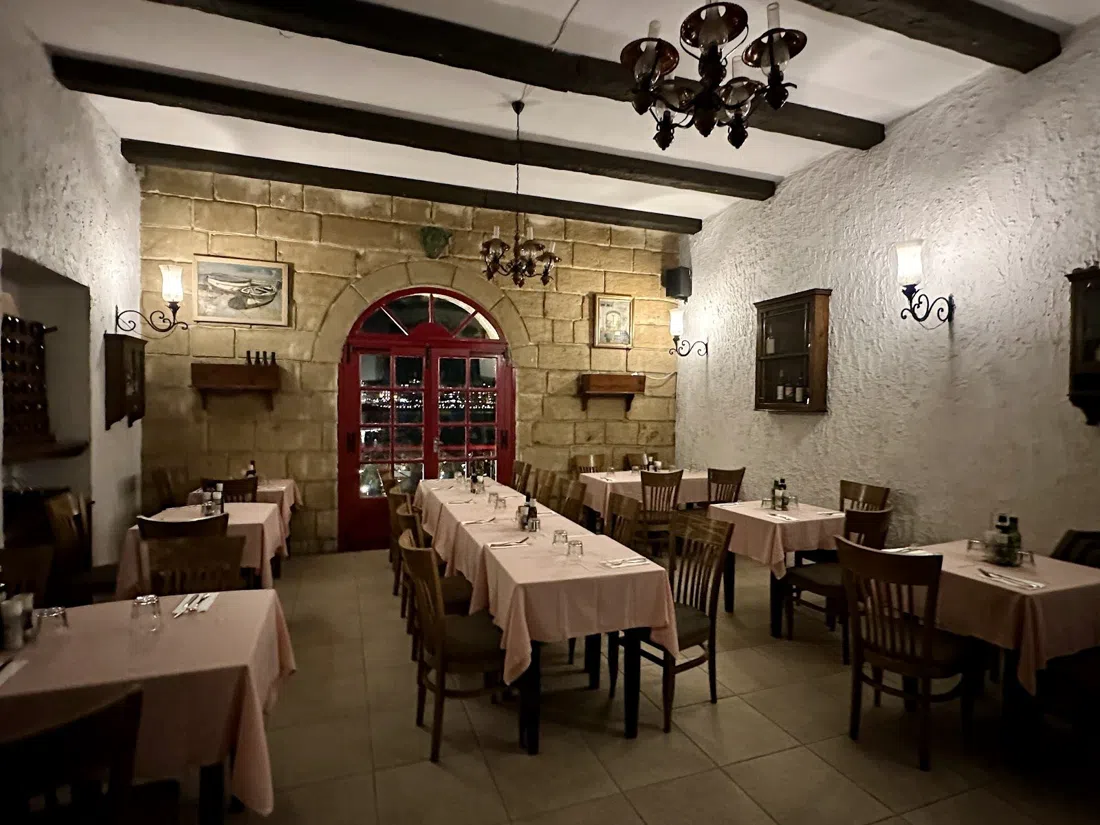
If you go to a single address off this list, make it Kazin Banda San Ġiljan Gastropub (St Julian's Band Club, A.D. 1927), a short walk up from Spinola Bay towards the church. This is the club that organises the festa, founded in 1927, and the band whose marches you hear through the streets is its own. Walk-ins are fine and outsiders are genuinely welcome (I have never once been made to feel like a tourist at this bar), but understand what the room is during festa week: packed with the band's own supporters, loud, and operating at speed.
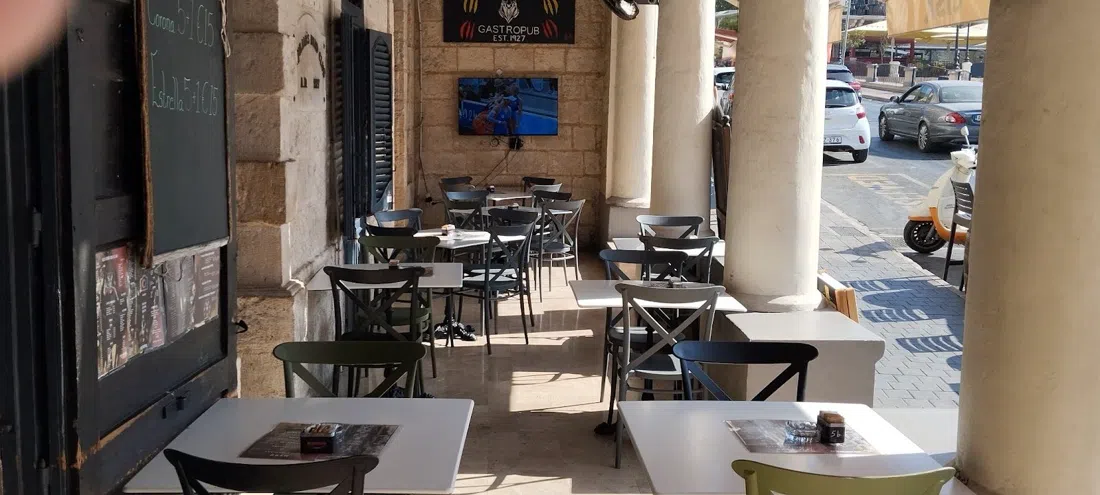
The kitchen does an honest aljotta. Fish stock built from whole small fish and their heads, garlic and tomato, rice cooked into it until the soup thickens, finished with marjoram and a lot of lemon. It arrives looking thin and tastes like concentrate. A bowl of that, a plate of something fried and a couple of pints runs roughly €10 to €20 a head, which is under half what the same quantity costs on the quay below. The pavement tables will take a group of six to ten if you arrive early: before 7:30pm on a festa night, before 8pm the rest of the year. After that you stand, and standing is fine.
Groups bigger than ten should not attempt this on the Saturday or Sunday. It is a parish bar on the two busiest nights of its year, and the queue behind you is made of people who built the decorations.
Qubbajt, and the stall worth the queue
Every Maltese festa has nougat, and nougat is the one food most Maltese people will tell you is a festa. The operator that sets up here is Beehive Confectionery, trading as Iż-Żebbuġi Hawn: a street stall near the church, no booking, permanent queue. Robert Caruana's family have run these stands at village feasts since 1948, which in practice means a different parish every weekend of the summer and a very exact idea of how much to make.
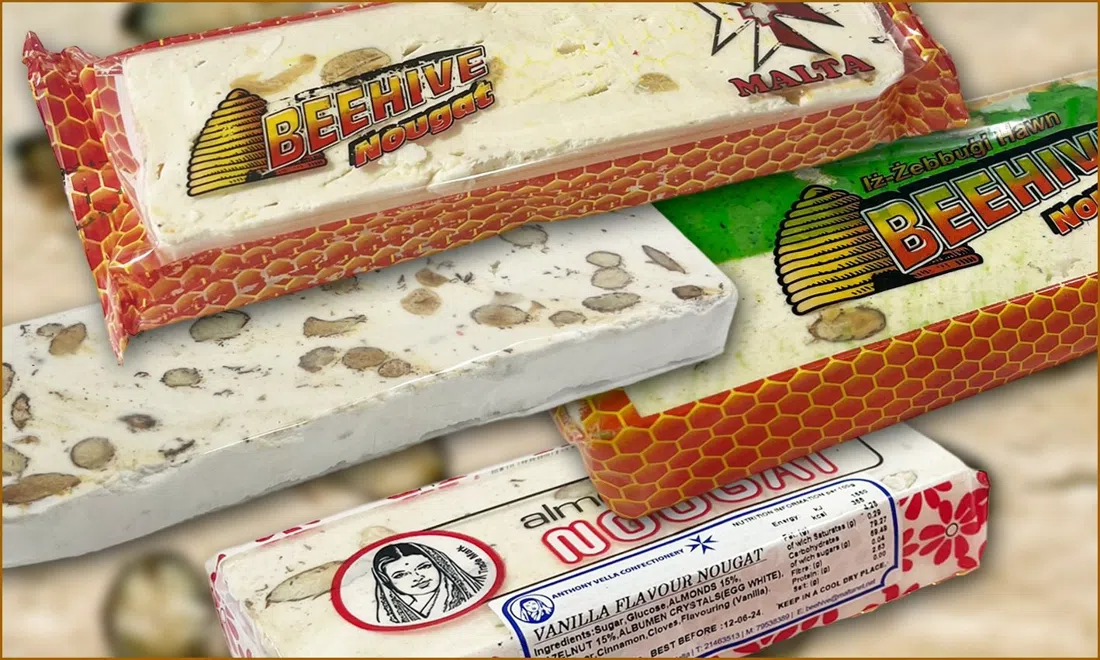
What you are buying is a slab, cut to order off a block with a short knife: whole almonds suspended in cooked sugar and honey set with egg white, either the hard version you have to snap or the soft version that pulls. Roughly €2 to €8 depending on how big a piece you point at. Ask for the soft one (qubbajt artab) if you have fillings you care about. Eat it the same night, because by the next morning the soft sort has gone sticky and the hard sort chewy, and neither is as good as it was at the stall.
If you need a quantity for a group, the bakery itself takes bulk and group orders on weekdays, 07:00 to 16:00, Monday to Friday, which is worth knowing if you are feeding twelve people on a boat and do not want to queue twice. Alongside it on the street you get the rest of the festa cast: imqaret, date paste folded into pastry and deep-fried, sold hot in paper; and nut brittles by weight.
Festa cooking at a table, with no folklore attached
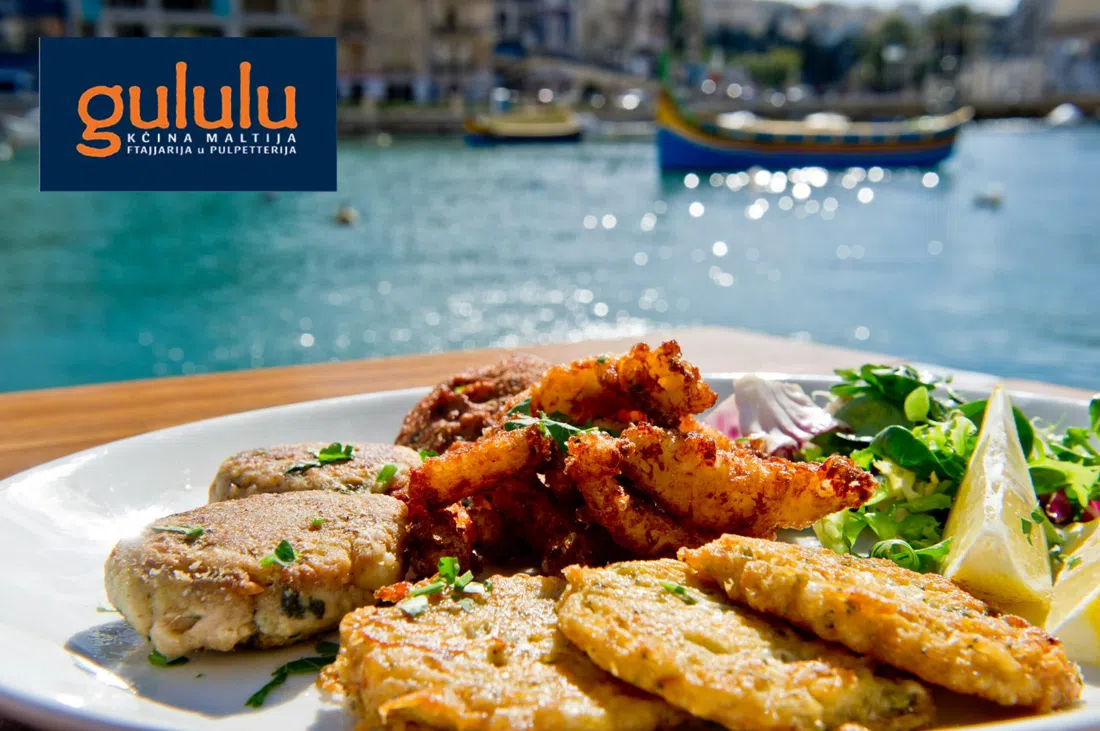
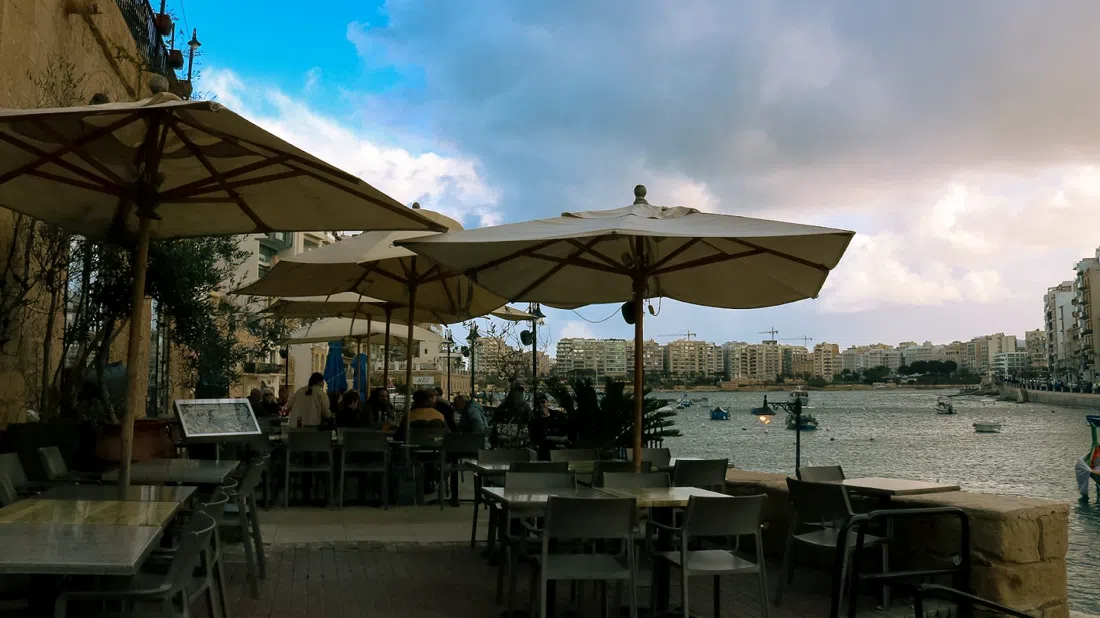
When the trestle tables pack up, the kitchen I send people to is Gululu – Kċina Maltija, on the Spinola Bay seafront. It cooks the festa repertoire year-round without the fishing-net-on-the-wall routine. The stuffat tal-qarnit is the order: octopus braised slowly in red wine and tomato with bay, olives and peas until the tentacle gives under a fork, the sauce reduced to something you keep eating with bread for ten minutes after the octopus is gone. Fenek is done properly: rabbit in garlic and wine, traditionally spaghetti dressed in the braising sauce first, then the meat as a second plate. Mains run roughly €18 to €30. The terrace takes group bookings, and you should book well ahead for festa weekend, because the entire bay is full from the Friday.
For the opposite kind of long table, Raffael Restaurant sits on the quayside at Spinola Bay and is priced for eight people who want to sit for three hours rather than for an occasion. It holds a 4.8 average across roughly 2,850 reviews, which at that volume means consistent rather than lucky. Mains roughly €15 to €25, walk-ins possible off-season, and the terrace is where I would put a group straight after the band marches finish.
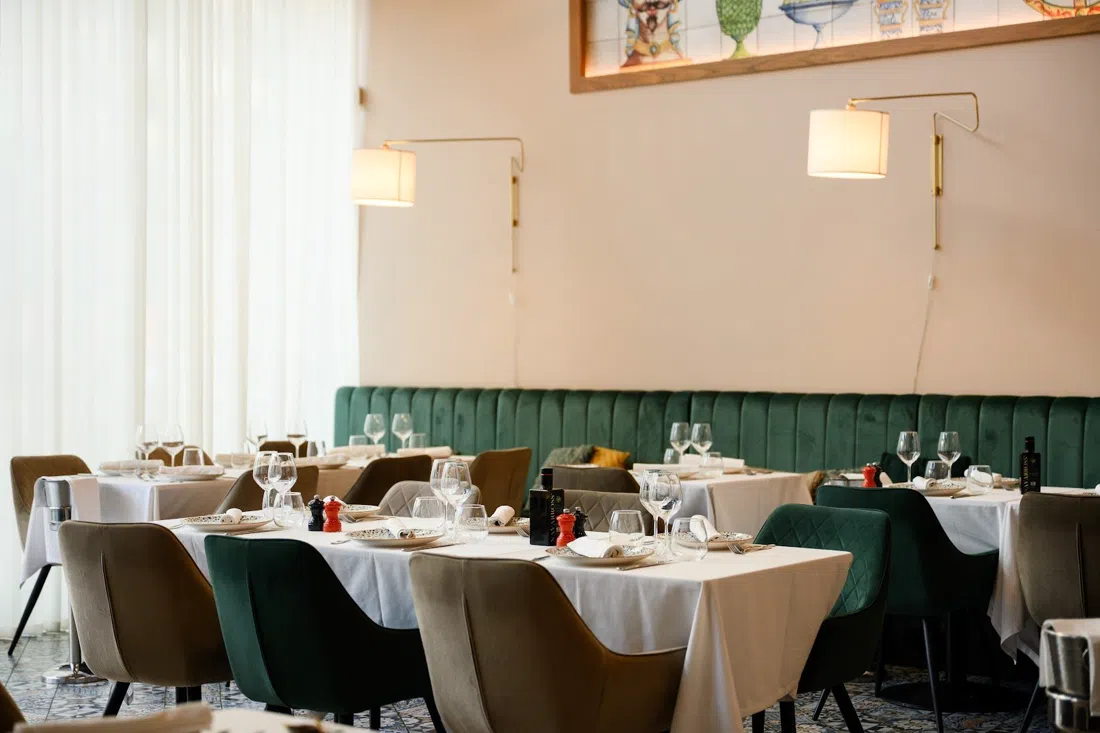
Le Majoliche, a block back from the bay, is a Sicilian trattoria open since 2015 and carrying a recommendation in the 2026 Michelin Guide Malta. It is generous in the exact way festa food is generous, with portions sized for people who have been outdoors all day, and the hand-painted tile work makes it the most distinctive room in St Julian's to sit in. Busy at lunch as well as dinner, so book. Mid-range, and it takes groups without complaint.
More on how the bay, the hill and Paceville fit together is in the St Julian's guide.
Tables above the pole and under the fireworks
The fireworks go up from a raft moored in the middle of Spinola Bay, so the sightline you want is a balcony facing the water. Peppino's, on the bay itself, has the best sit-down vantage point of any of them: the upper-floor balcony looks straight down the line of the raft, and the kitchen has been turning out Maltese and Italian plates here for decades, with reviews still strong through 2026. Mains roughly €18 to €28. Book for festa weekend specifically and say you want the balcony; it goes first, and nobody will move for you on the night.
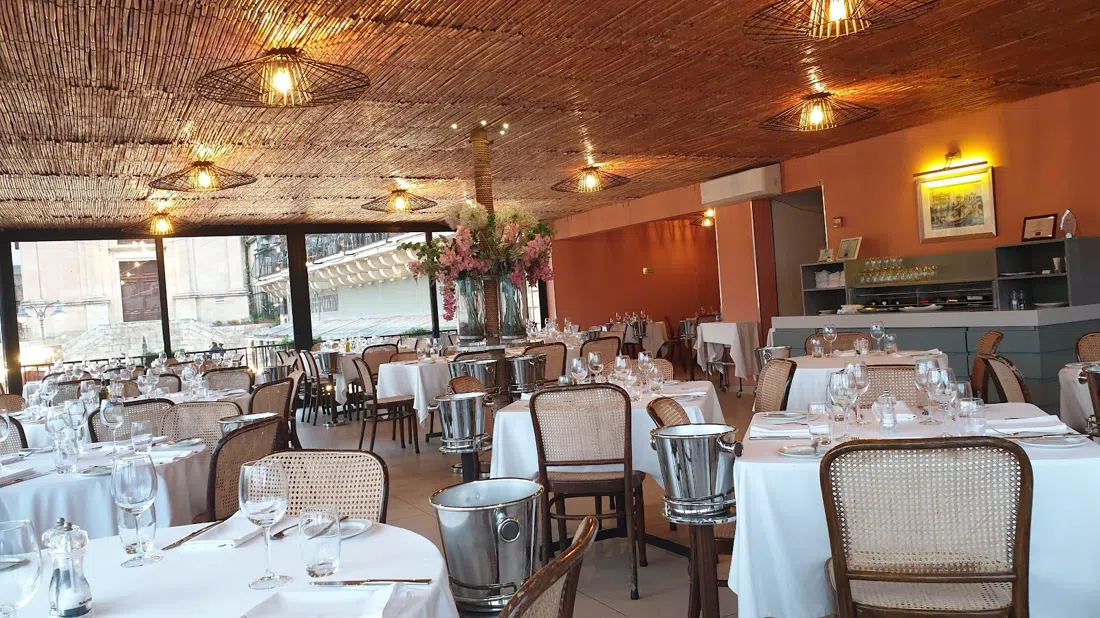
San Giuliano Restaurant is the institution directly above the bay, buying off the boats that moor below it, so the fish on your plate came out of the water the ġostra pole hangs over. Fish is priced by weight and brought to the table whole before cooking: pick it, agree the price, and split it across four or six people, which is both the cheaper route and the better ritual. Service runs 12:00 to 14:30 and 19:00 to 23:00, it is wheelchair accessible, and it is entirely used to groups.
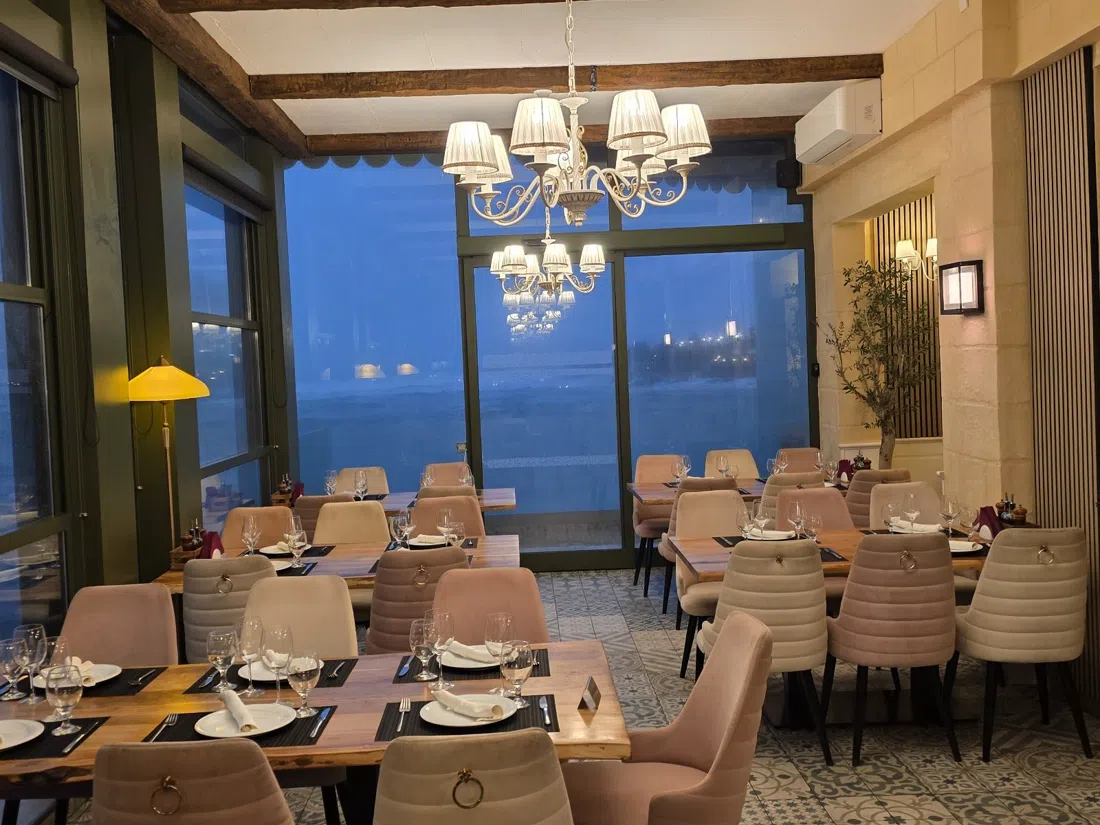
For the celebratory end of a festa day, Barracuda Restaurant sits at the Balluta Bay end of the walk, in a National Trust award-winning villa conversion it has occupied for nearly thirty years. It is the one dining room here where the building is as much the point as the fish: old stone, shuttered veranda over the water. Evenings only, from 18:00, mains roughly €28 to €45. Book, and ask for a veranda table when you do, because the inside room is a different and lesser evening.
The expensive end, and how it connects back
Rosamì at The Villa, set back from the waterfront, is the only Michelin star in St Julian's, retained for 2026 under chef Davide Marcon, and also holder of the 2026 Michelin Service Award. It is tasting-menu only, six or eight courses, in a small dining room. Not a walk-in, and not somewhere to arrive as nine people in festa clothes. Private group bookings are by arrangement. The thread back to the parish table is the cheese: local small-producer sheep's cheese handled seriously, the same ingredient the woman next door puts raw into a ftira with tomato paste, capers, olives and oil.
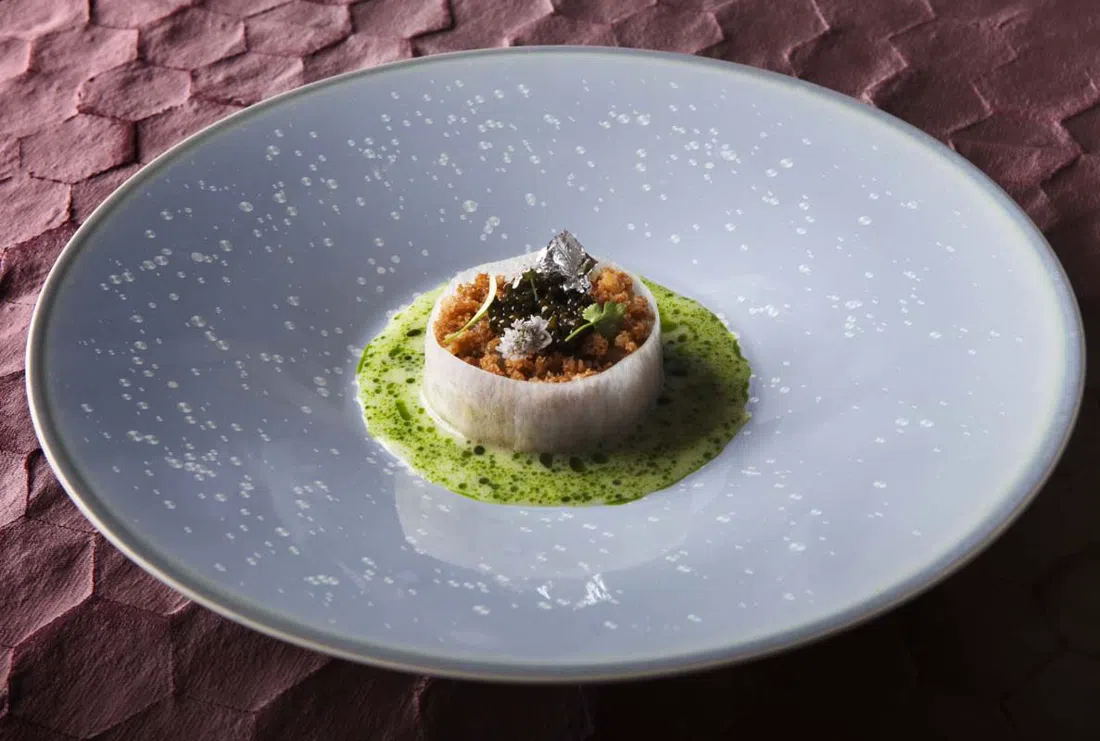
Caviar & Bull, in a hotel on the Spinola Bay strip, is Marvin Gauci's flagship and the one kitchen on this list that takes Maltese ingredients to full fine-dining pitch. Dinner only, 18:30 to 23:00, and unlike the star room it handles large parties and private dining properly. Be clear with yourself about what it is: a resort dining room, not a parish one. Over three nights it makes a good second dinner and a poor first one.

Couples against groups, plainly. The star room and the villa suit two people. The band club, the quayside and the whole-fish table suit six to ten. The street itself suits any number, as long as everyone is willing to stand.
Making the pastry with your hands
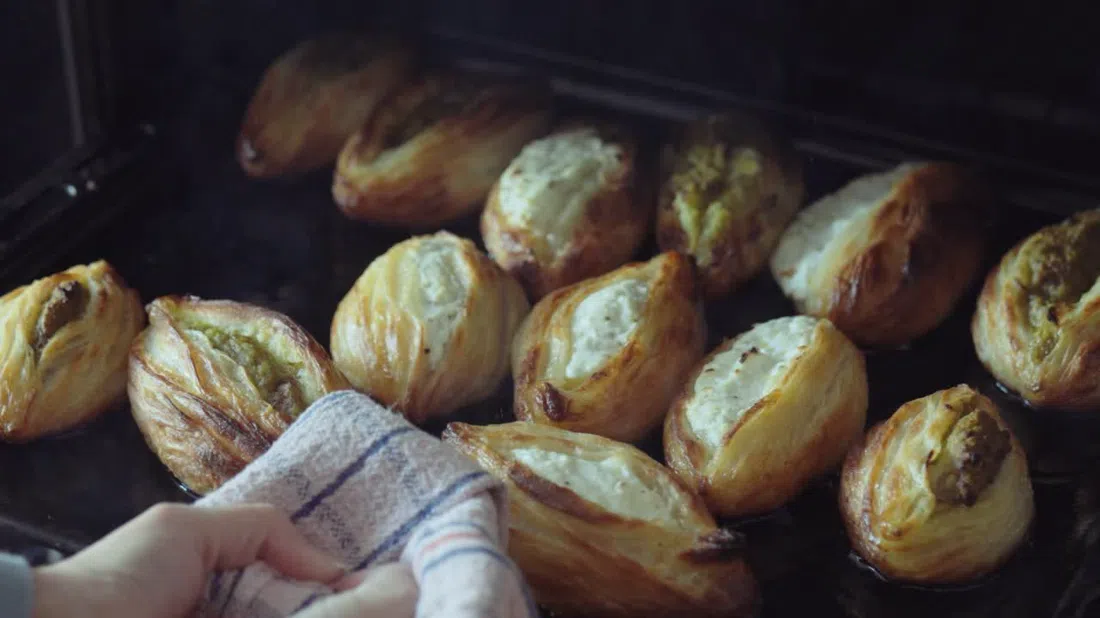
The closest a visitor gets to the mechanic of this whole story, neighbours making food with their hands for other people, is A Pastizzi Experience with Michela Cammarota Cefai, now based inland, roughly fifteen minutes by car from St Julian's. Two hours, around €40 per person, groups of about ten maximum, hosted in English, Italian or Maltese. You laminate the dough yourself, and that is the lesson: the fat is worked into thin sheets in layers so the pastry blisters open into the diamond shape, and the filling is either ricotta or crushed yellow peas with onion. It is the only dedicated pastizzi class on the island. Confirm the address when you book, because the venue has already moved once.
Practical notes
The feast is the last Sunday of August, every year; in 2026 that was 30 August. Come Friday for the quiet build, Saturday night for the marches, Sunday for everything at once. Be standing on your chosen street before 7pm on the Sunday.
Everything above except the cooking class is inside a fifteen-minute walk along the water. Buses run the coast road and get rerouted or halted around the procession, so expect to walk the last stretch. Ride-hailing apps work and are the cheap way home late, but set your pickup a few streets inland on the Sunday, because no driver is getting into the bay.
The restaurants all take cards. The street stalls do not, reliably. Bring €20 to €40 per person in small notes and coins for nougat, imqaret, kiosk drinks and the band club bar, where cash moves faster than a card.
A full festa day eating on the street costs €25 to €35 a head; add the band club for a proper plate and you are at about €40. A sit-down dinner on the bay puts the day at €60 to €90, and the villa or the star room takes it past €150. Beds are the real expense that weekend, so book months out, and compare what is left on the bay against the hill in the St Julian's hotel search.