
The promenade at Spinola Bay in February is a different object from the one in August. Same curve of water, same ring of balconies stacked above it, but the terrace chairs are chained in stacks of nine, the fishing boats pull hard on their lines, and the loudest thing on the bay is water slapping the slipway. You can hear the people walking ahead of you, because there are four of them.
What winter actually does to St Julian's
From the start of November to the middle of March the district runs at a fraction of its summer volume. Daytime air sits in the mid-teens, occasionally pushing to the high teens on a still day. The sea holds around 15–16°C, the figure the dive school quotes and the one that matters if you intend to get in it. Rain arrives in bursts of an hour or two rather than as all-day drizzle, and the wind is the variable that will change your plans: a northeasterly pushing straight into the bay puts spray over the lower promenade railings and makes any roof terrace on the headland unusable within ten minutes.
What closes is the warm-weather infrastructure. The lidos and beach clubs are done by October and will not reopen until spring. Boat-based activity becomes a day-by-day proposition rather than something you book in advance with confidence. What stays open is more than most visitors expect, and it is the part worth planning around: the bay's restaurants, the casino, the hotel spa, the indoor entertainment complex and the dive centre all hold stated winter hours. Everything named in this piece has its winter trading on the record. For the wider picture of the district, the St Julian's guide covers the parts of the year this piece ignores.
The walk from Spinola Bay out to the Dragonara headland
The route is about two and a half kilometres and takes forty minutes at a walking pace, an hour if you stop. Start at the back of Spinola Bay, where LOT61 Coffee Roasters sits in Spinola Park, a few minutes in from the water. It is ranked first among the district's coffee rooms and was confirmed trading within the last month. There are no bookings and no menus in six languages. On a Tuesday in January the room holds office workers from the surrounding blocks and runners coming off the seafront. Hours are 08:00–17:00 Monday to Friday and 09:00–18:00 at weekends, and a coffee runs €1–5. It handles a handful of people comfortably and a coach party not at all.
From there walk down to the water and take the bay anti-clockwise, past the moored luzzus and the LOVE sculpture on the water's edge, which in low season you can photograph without waiting. The seafront carries you round to the Portomaso marina, where the yachts sit wrapped and the boardwalk is empty enough that you notice the surface underfoot. Continue up and through towards St George's Bay, then take the last stretch out onto the Dragonara headland.
That final ten minutes is the reason to do this walk in winter rather than in June. Dragonara Casino occupies a nineteenth-century palace on an exposed point, and in a gale, with the sea working on the rocks on three sides of it, the building reads as the private house on a headland it was built as rather than as a gaming floor. It is open 24 hours a day, all year. Admission is free, but you register at the desk with photo ID; visitors must be 18 or over, and Maltese nationals 25 or over. There is no enforced dress code, though smart casual is the expectation and flip-flops will not get you in. You can walk the point, look at the palace and leave without going near a table.

Winter food around the bay
The summer menus here are built for people who want something cold on a terrace. In winter the kitchens that cook properly get to show it, and it is the only time of year you have much choice of table.
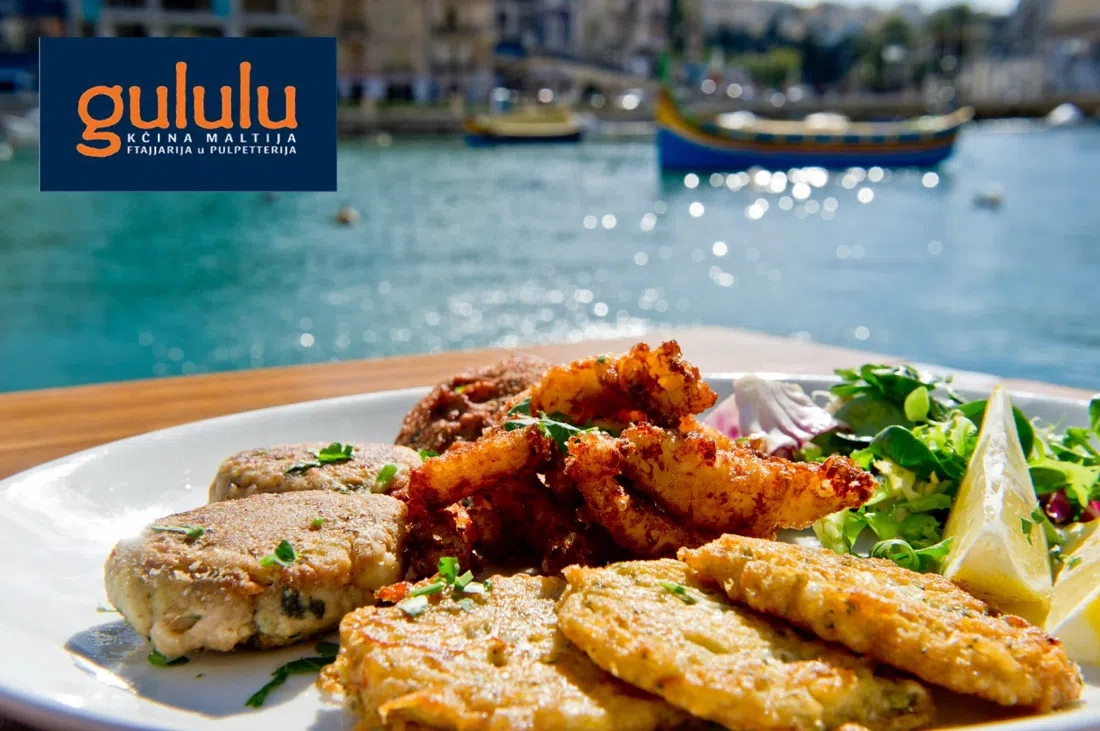
Gululu (Spinola Bay, on the water) is the one kitchen on the bay cooking Maltese winter food seriously: braised rabbit, stuffat, bigilla. That is what the season tastes like here rather than what the July carte sells. It opens daily, 12:00–16:00 and 18:00–23:00, and costs roughly €30–45 a head. It is the most group-friendly of the bay's restaurants, with set group menus available, so it is the obvious choice if there are eight of you and you want to eat together rather than at two tables.
Zest (Spinola Bay) has been running since 2002 and is Michelin-listed, cooking Japanese-Peruvian Nikkei. Dinner is 18:30–23:00 daily and the bill lands around €55–75 a head. The winter arithmetic works in your favour here more than anywhere else on the bay. The terrace is fourteen covers, so in August the bay-view seats are effectively unobtainable and you eat against the inside wall. In January you can ask for the bay side when you book and reasonably expect to get it. Still book, because fourteen covers is fourteen covers, but ask.
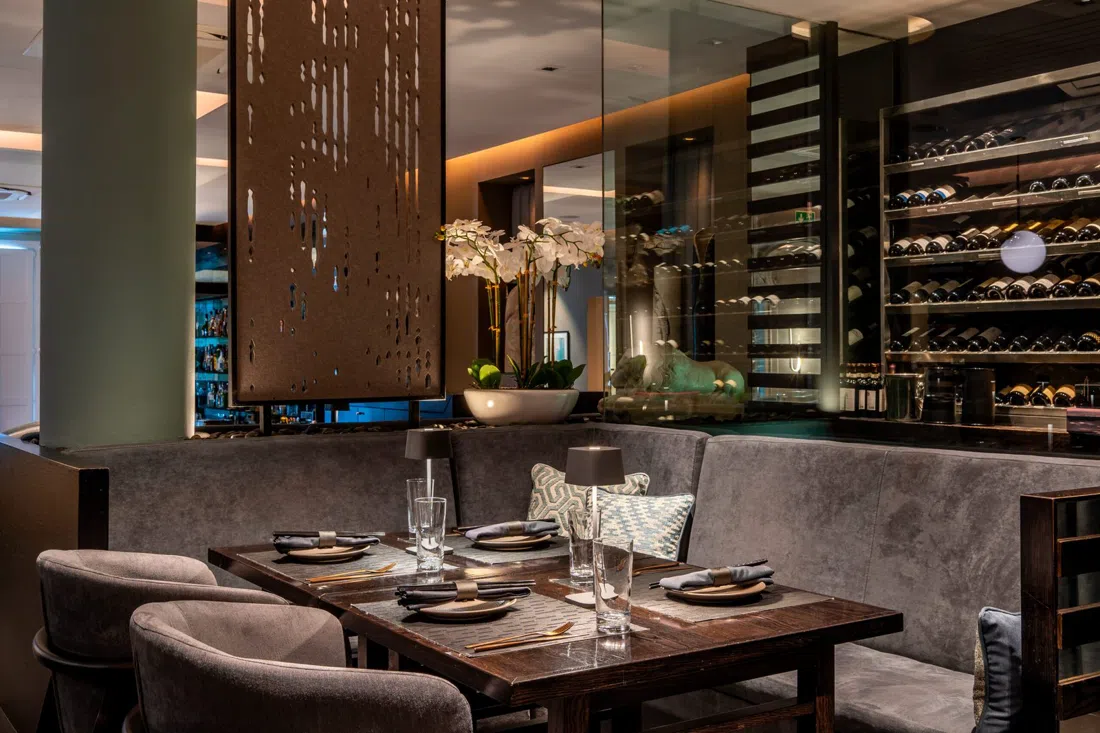
Zeri's Restaurant (Portomaso marina) is chef patron Mark Zerafa's Mediterranean and seafood room, and it carries January 2026 reviews on the board. That is the useful detail: this is proven winter trading, not a marina address that goes dark in November. Dinner runs nightly with lunch added on Saturday and Sunday, around €50–70 a head. Groups are accommodated and you can book online or by phone.

The starred table that only opens up in low season
Rosamì at The Villa (St Julian's, set back from the bay) is the island's only starred kitchen inside the district, and it holds regular winter hours: dinner Monday, Tuesday, Wednesday, Friday and Saturday, closed Thursday and Sunday. Write those two closed days down, because they are the single most common way a winter plan here falls over.
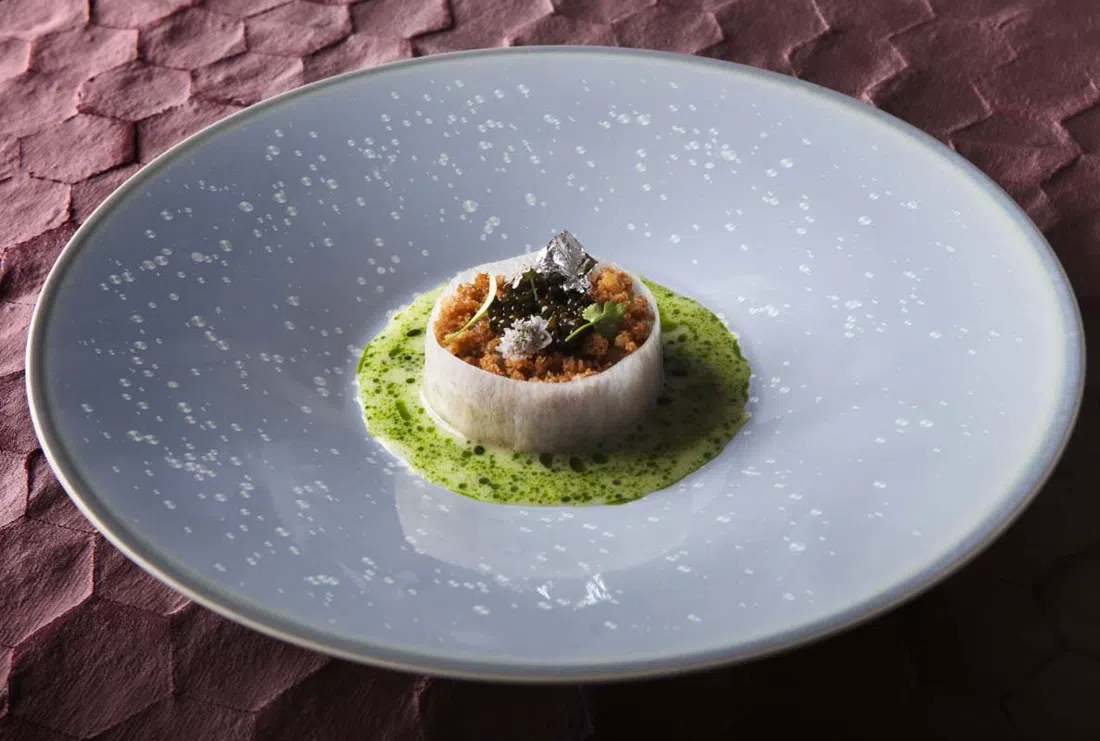
It is a compact room, which is why it belongs in a low-season piece. In August the table is a matter of luck; in January it is a matter of booking. The tasting menu is €120 a head before wine. Booking goes through SevenRooms, cancellation is 24 hours with a €50 per person charge after that, the minimum age is 10, and the dress code is smart casual. Groups are small-groups-only and by arrangement, so do not turn up as a party of ten and expect improvisation. For two or four people, this is the one reservation in the district worth building an evening around, and the one most likely to be available at short notice between November and March.
Where to go when the weather turns
Plan for one washed-out afternoon in three.
Anima (a rooftop above St Julian's) is new to the MICHELIN Guide Malta 2026 and solves the winter problem of wanting to see the weather without standing in it. There is a large glazed room as well as the terrace, running to several hundred covers, and the indoor level stays open when the roof is unusable, which it will be in any serious wind. Booking is online, dress is smart casual, and you are looking at roughly €60–90 a head. Watching a storm come in from behind that glass is a better use of a bad afternoon than most things on the island.

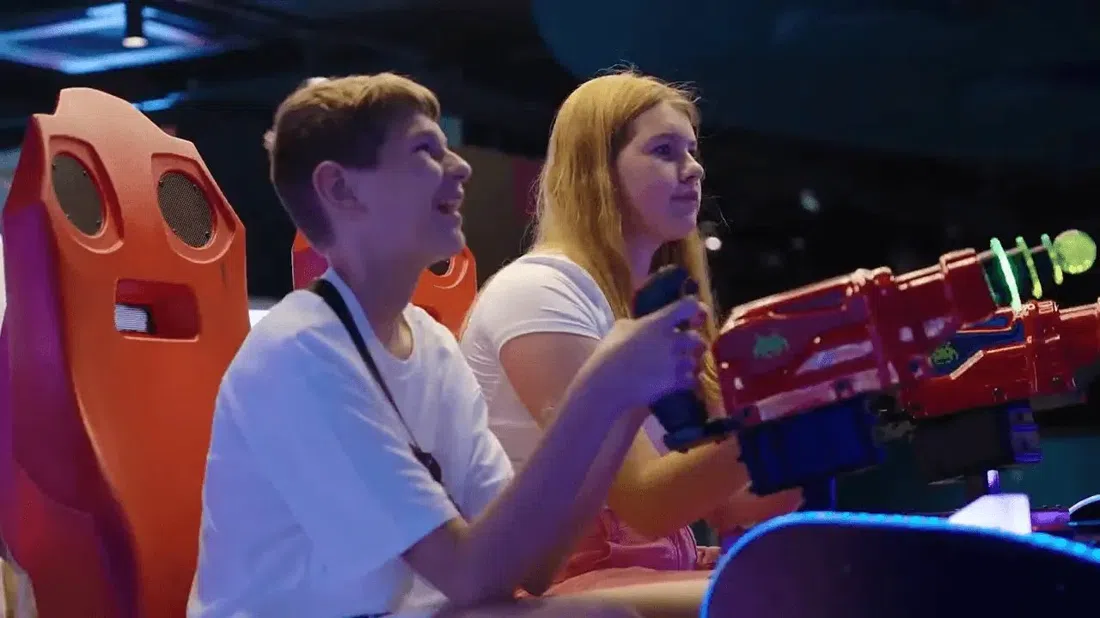
The Eden (St George's Bay) is the district's only real wet-weather plan at scale, which is why local families fill it from November onwards. Eden Leisure Group rebuilt it in 2024 around the old SuperBowl site, with the 17-screen cinema next door under the same roof. It opens daily 10:00 to 01:00. A bowling game is roughly €8–12 and the laser tag, escape rooms and karaoke are priced per head. It is built for groups, and it is the one place here where a party of twelve is an asset rather than a logistical problem.
Myoka Spa at Hilton Malta (Portomaso) is the substitute for the beach clubs that shut in October. The island's largest spa operator keeps full winter hours at this site, with an indoor pool and heat rooms. Opening is 10:00–20:00 Monday to Friday and 09:00–19:00 at weekends, treatments run roughly €70–130, and you should pre-book. Couples and small groups are catered for and there are day packages, so it works as a half-day rather than only as an hour.
The water is cold and the visibility is better
Divewise (St Julian's waterfront) is a PADI Career Development Centre operating all year, and winter is the season its instructors take most seriously. The water is 15–16°C, so you are in a thick wetsuit or a semi-dry and you will feel it on the second dive. In exchange, the visibility is at its clearest once the summer crowds and the boat traffic have gone, and the sites are not shared with anyone.

There are daily starts, but two winter caveats. Between November and March the 15:00 slot is not run, so your diving day finishes earlier than it would in summer, and boat dives are weather-dependent in a way shore dives are not. Build a spare day into the trip if a boat site is the thing you came for. A guided dive is roughly €60–75 and an Open Water course around €450–550. Groups are fine, from beginner through to Divemaster level, and courses in low season tend to run with fewer people per instructor.
Groups, couples and what happens at the door
Couples and pairs are best served by Rosamì at The Villa and by Zest, both of which are small rooms where two covers are easy and ten are a negotiation. Groups belong at Gululu, at The Eden and at Dragonara Casino, all three of which are set up for numbers and used to events. Anima and Zeri's sit in the middle and will take a group if you tell them in advance.
Door policies are mild but real. The casino wants ID and will refuse flip-flops; the age floor is 18, or 25 if you hold a Maltese passport. Rosamì will not seat a child under 10 and charges €50 per person if you cancel inside 24 hours. Nothing in the district requires a jacket, but smart casual is the baseline at Rosamì, Anima and the casino, and in winter that is easy, since you will be wearing a coat anyway.
Practical notes for a winter trip
Getting here is straightforward and does not need a car. Several routes, the 13, 14 and 16 among them, connect this stretch of coast with the capital, the X2 express runs from the airport, and the 222 comes down the coast from the north of the island. Use a Tallinja card rather than paying per trip. Winter timetables thin slightly and evening services are the first to feel it, so check the operator's live times before you depend on a last bus; a taxi back across the district is cheap and plentiful.
Cards are accepted everywhere named here. Carry €20 or so in coins and small notes for coffee, kiosks and the occasional bus fare. Rain gear beats an umbrella, because the wind will destroy the umbrella.
On timing: midweek is quieter than the weekend even in low season, and a Thursday or Sunday will cost you Rosamì. Book that one as far ahead as you can and treat everything else as two or three days' notice. Walk the Dragonara headland in the hour before sunset, which in January falls around 17:00, then eat at 19:00 when the bay restaurants are warm and half full.
Budget, per person, for a full day: €5 for coffee, €35 at Gululu for lunch, €70 for a guided dive or €90 for a spa treatment, and €60–120 for dinner depending on whether you are at Anima or at the starred room. Accommodation is where low season pays you back hardest, with the same rooms going for a fraction of their August rates. Compare what is actually available for your dates through the St Julian's hotel search before you commit to a week.