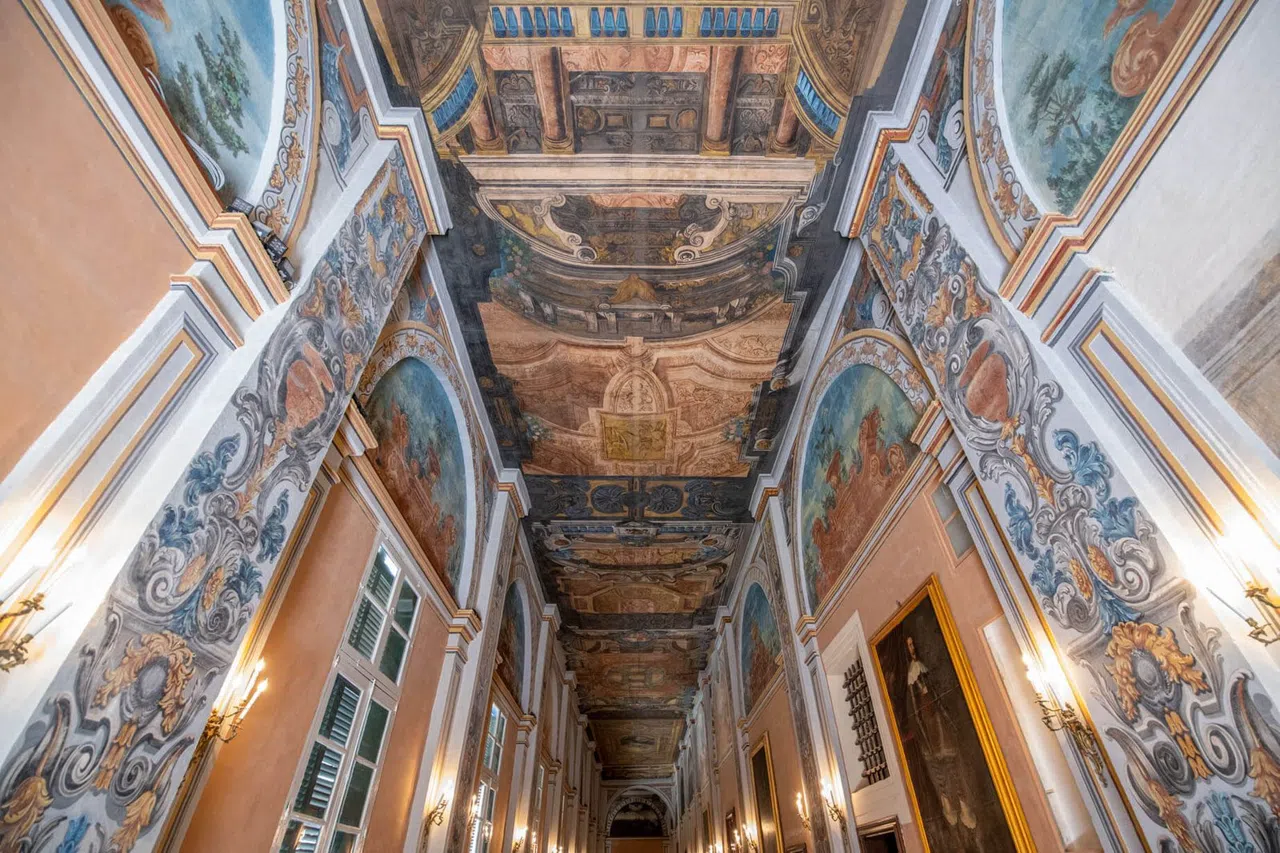

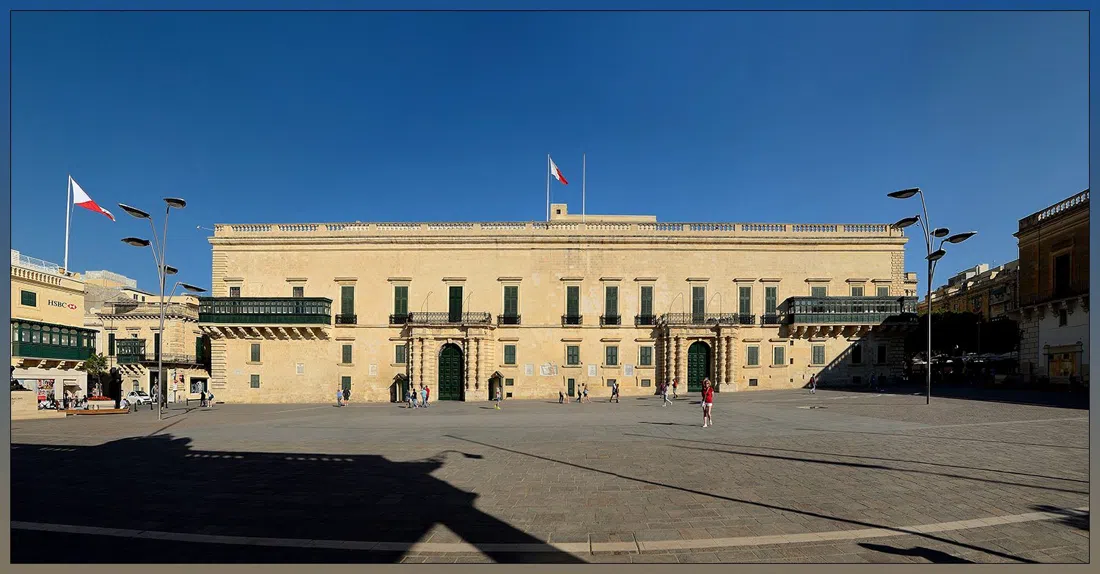
From the square outside, the Grand Master's Palace looks like nothing much: a long ochre wall, two dark doorways, a clock tower most people walk straight past. Step through and the temperature drops several degrees, the noise of the square goes flat behind you, and you are standing in a corridor hung with portraits with a courtyard of orange trees to one side. The men who ran the Order of St John ran it from these rooms for roughly 250 years, and after a €40 million restoration you can now walk through about 85% of the building.
What is behind that plain façade
Grand Master's Palace (Il-Palazz tal-Granmastru) sits on the capital's main square, halfway along Republic Street, and it is Heritage Malta's most-visited site, with around 300,000 people a year coming through it. The restoration reopened it in 2024, and a further nine state rooms were added in June 2025, which is why a visit now takes substantially longer than it did a few years ago.
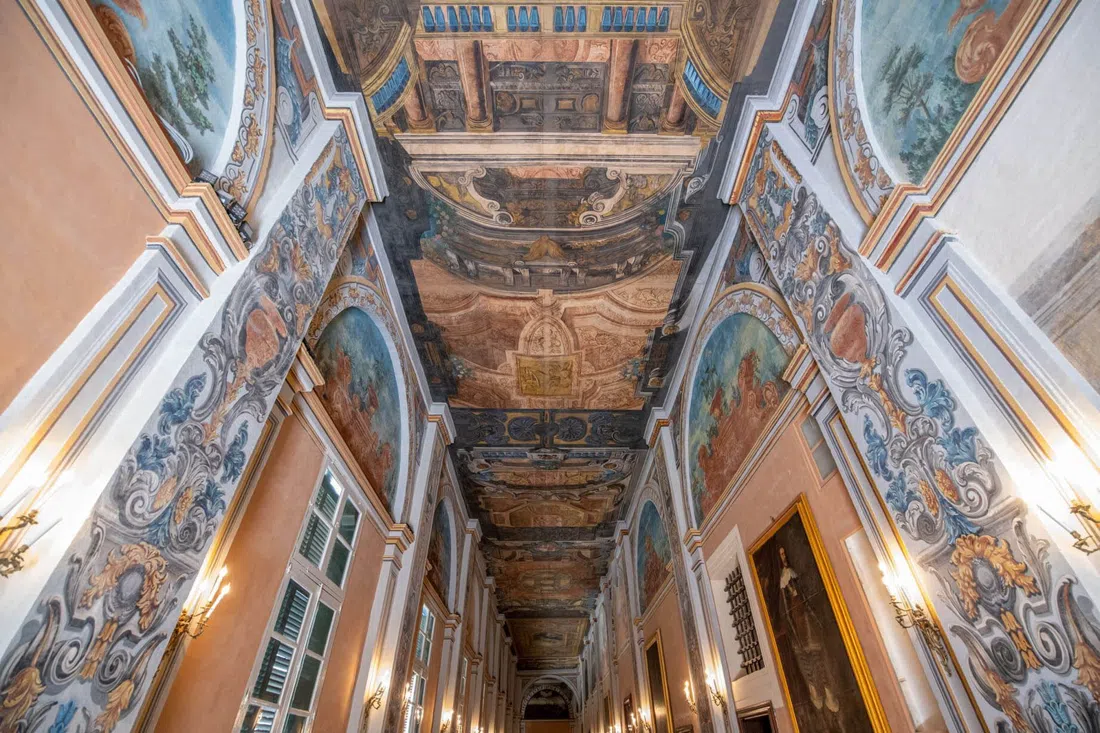
There are two halves to it. Upstairs are the state rooms: council chambers, audience rooms, tapestry halls, painted friezes running above head height, and long connecting corridors lined with portraits of the men who held the office. The rooms are not vast by European palace standards. This was a working seat of government on a small island, not a summer residence, and the interest is in the density of the decoration rather than the scale. Downstairs is the Armoury, a single long hall of the Order's armour and weapons, arranged by type rather than by story, and it is the part that tends to hold children who have run out of patience with gilt ceilings.
The forecourt is St George's Square (Pjazza San Ġorġ), directly outside the palace door, and it is where the visit begins whether you plan it that way or not. It is an open public space with no restrictions, it is where guided parties assemble before their entry time, and there is occasionally ceremonial with a guard change. It costs nothing, it is the one clean photograph of the building you will get, and on a hot day the flat paving throws heat back at you, so it is not a place to wait forty minutes in August.
How long you actually need
Ninety minutes is the honest figure for the state rooms and the Armoury at an unhurried pace, reading the panels but not all of them. Two hours if you are the sort of person who reads everything and wants to sit down twice. Forty-five minutes is possible and it is what most people on a broader walking itinerary spend, but the nine rooms added in 2025 mean a rushed visit now skips a real portion of the building rather than a wing you would not have missed.
The constraint is not the rooms, it is the corridors between them. They are narrow, and when two tour parties meet in one the flow stops. That is worth knowing before you choose your entry time.
Tickets, and whether to book ahead
Adult entry is €12. Youth aged 12 to 17 and visitors aged 60 and over pay €10, children from 6 to 11 pay €8, and under-6s go free. If you are in Malta for more than a couple of days and intend to see several state sites, the Heritage Malta Passport covers this one and quickly pays for itself.
You can buy at the door, and outside the busiest hours you will usually walk in without much of a wait. What you cannot do at the door is guarantee a particular time, and guided walking parties enter on pre-booked timed tickets, which means the door queue can stall while a booked group goes through. If you are a group of more than about eight, book ahead regardless. Those narrow corridors are the reason the site asks larger parties to hold a slot.
A guided option is worth considering on its own terms rather than as a queue trick. Guided walks that take in the palace run seven days a week and start from around 26 USD per person, and the best-reviewed of them holds 4.9 out of 5 from 3,185 travellers, which tells you the commentary is generally good rather than that entry is hard to come by. If you would rather read the rooms yourself, the door ticket is the cheaper and perfectly adequate route.
Three closures to check before you set out
This is the part that catches people, and all three are live for 2026.
The Throne Room is closed until further notice. It is the room visitors most often ask after, and it is not currently part of the route.
On selected Wednesdays through 2026 and into 2027, the state rooms do not open until 13:30. On those mornings the Armoury is the only part running, so a Wednesday morning visit gets you roughly half the building for the full ticket. Check the day before.
The palace closes entirely on 26 October 2026 for Budget Day. If that is your one day in the capital, plan the rest of this article instead and come back another time.
Corridors, groups and the dress question
The palace itself has no dress code and no bag policy that will trouble an ordinary visitor. Couples and pairs move through it easily. Families are fine. Coach-sized parties are the awkward fit: the site takes them, but the corridors mean a group of thirty arrives in the state rooms as three groups of ten whether it wants to or not, and schools are usually split for the same reason.
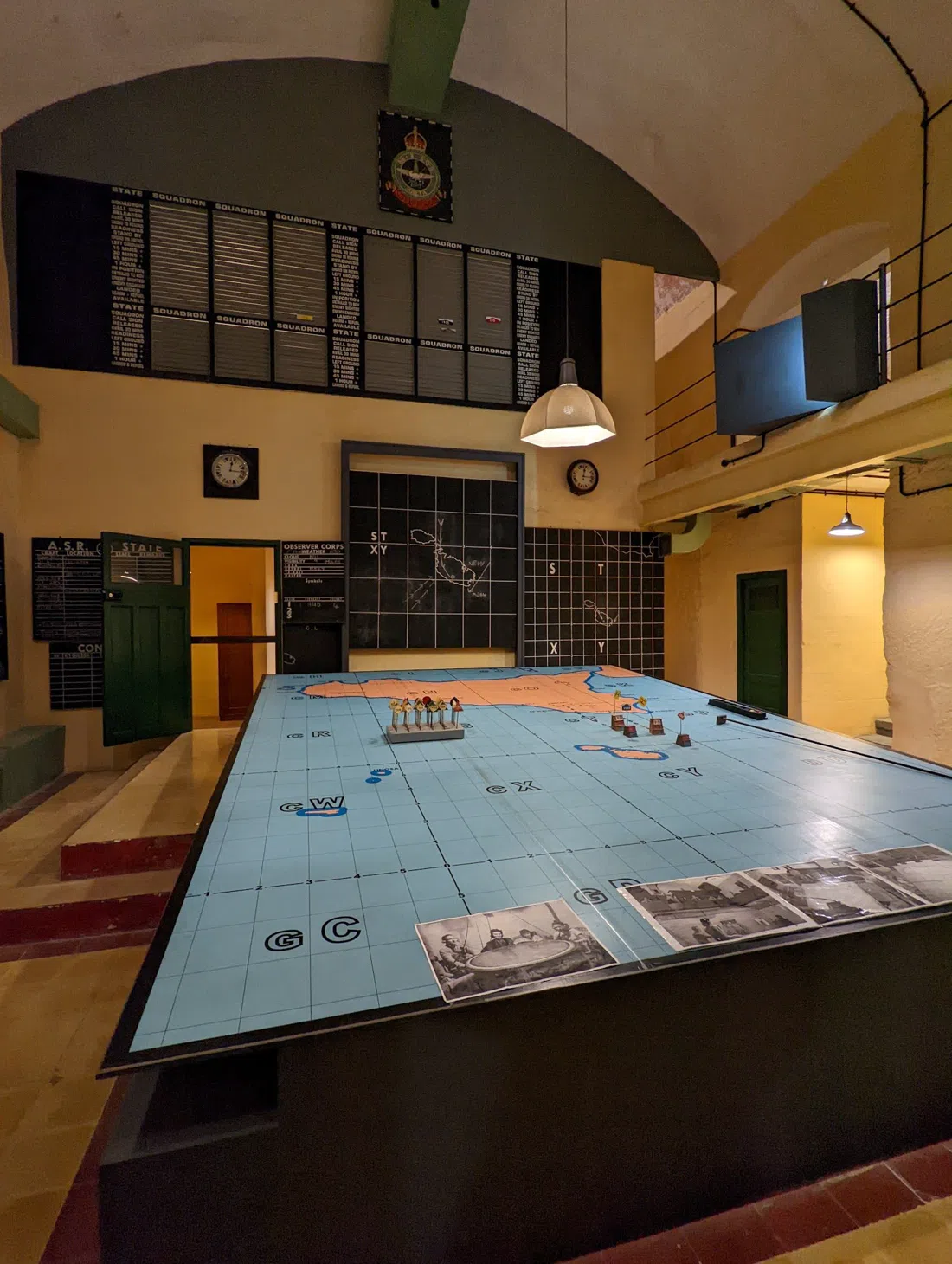
If anyone in your party has mobility trouble, ask at the ticket desk about the route on the day rather than assuming. Note too that the nearby Lascaris War Rooms (cut into the ditch below the Upper Barrakka, a few minutes' walk) is the site in the area that definitely does not suit, since it is deep underground and reached by stairs.
Best time to go
First entry in the morning is the quietest hour of the day, and it is the one time you can stand alone in a state room. The second-best window is after about 15:00, when the mid-morning walking groups have cleared and the cruise arrivals have started back down to the quay.
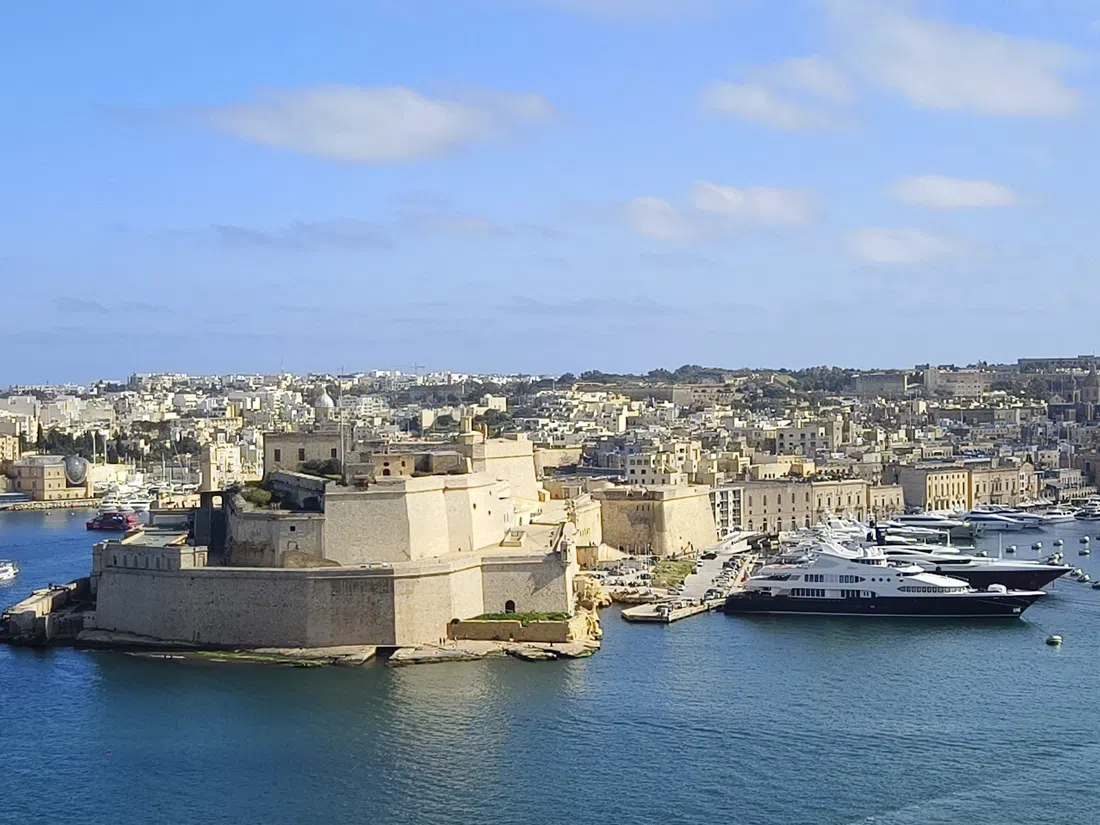
Build the day around one fixed clock: the Saluting Battery (on the bastion below the Upper Barrakka, five minutes away) fires at 12:00 and 16:00, Monday to Saturday, and is open 10:00 to 16:30 with last admission at 16:00. Entry is €6 for adults 16 and over and €3 for children 5 to 15, with a guided tour and audio guide included, and you want to be in place fifteen minutes before a firing to get a spot. A 10:00 palace entry, out by 11:30, coffee, and the noon gun is the cleanest morning shape available in this city.
Avoid Sunday if you can. The palace runs, but three of the best things around it do not: the Co-Cathedral is closed Sundays and public holidays, Casa Rocca Piccola (Republic Street, five minutes on) closes Sundays, and so does the one restaurant here worth booking. Sunday is also when day-trippers arrive in the greatest number.

In July and August, do the palace early and keep an indoor, air-conditioned option in reserve for the middle of the afternoon. In winter the light in the state rooms is better in the morning than late, and the free gardens are pleasant at an hour when they would be unbearable in summer.
The four-minute walk to St John's Co-Cathedral
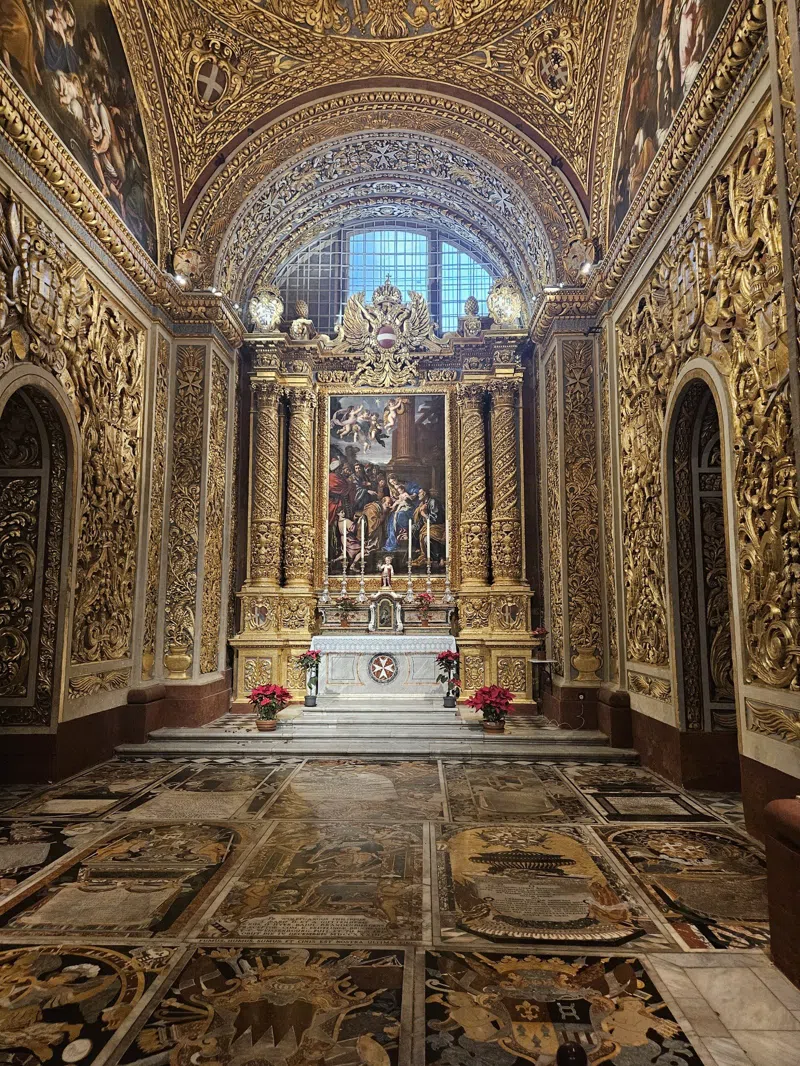
St John's Co-Cathedral (just off Republic Street, four minutes from the palace door) is the one pairing nobody should skip. Adult entry is €15, seniors and students pay €12, and under-12s go free with an adult; the audio guide is included and the belfry tour is an extra €5 paid at the door. It opens Monday to Saturday 09:00 to 16:45 with last admission at 16:00, and it is closed on Sundays and public holidays.
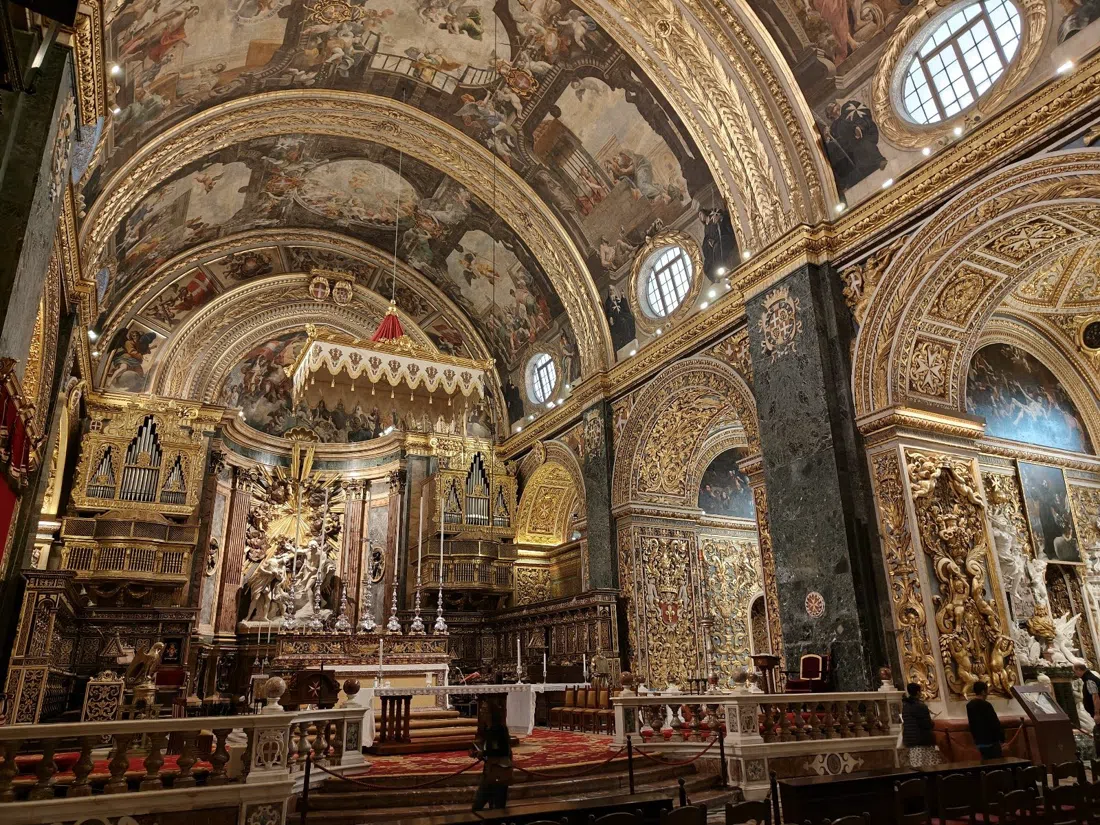
The dress code is enforced at the door for everyone, without exception and without much discussion. Shoulders and knees covered, and stiletto heels are banned outright to protect the marble floor. Bring flats if that is a problem, because the door staff will not let it go. Groups need a pre-booked slot.
Filling out the rest of the day
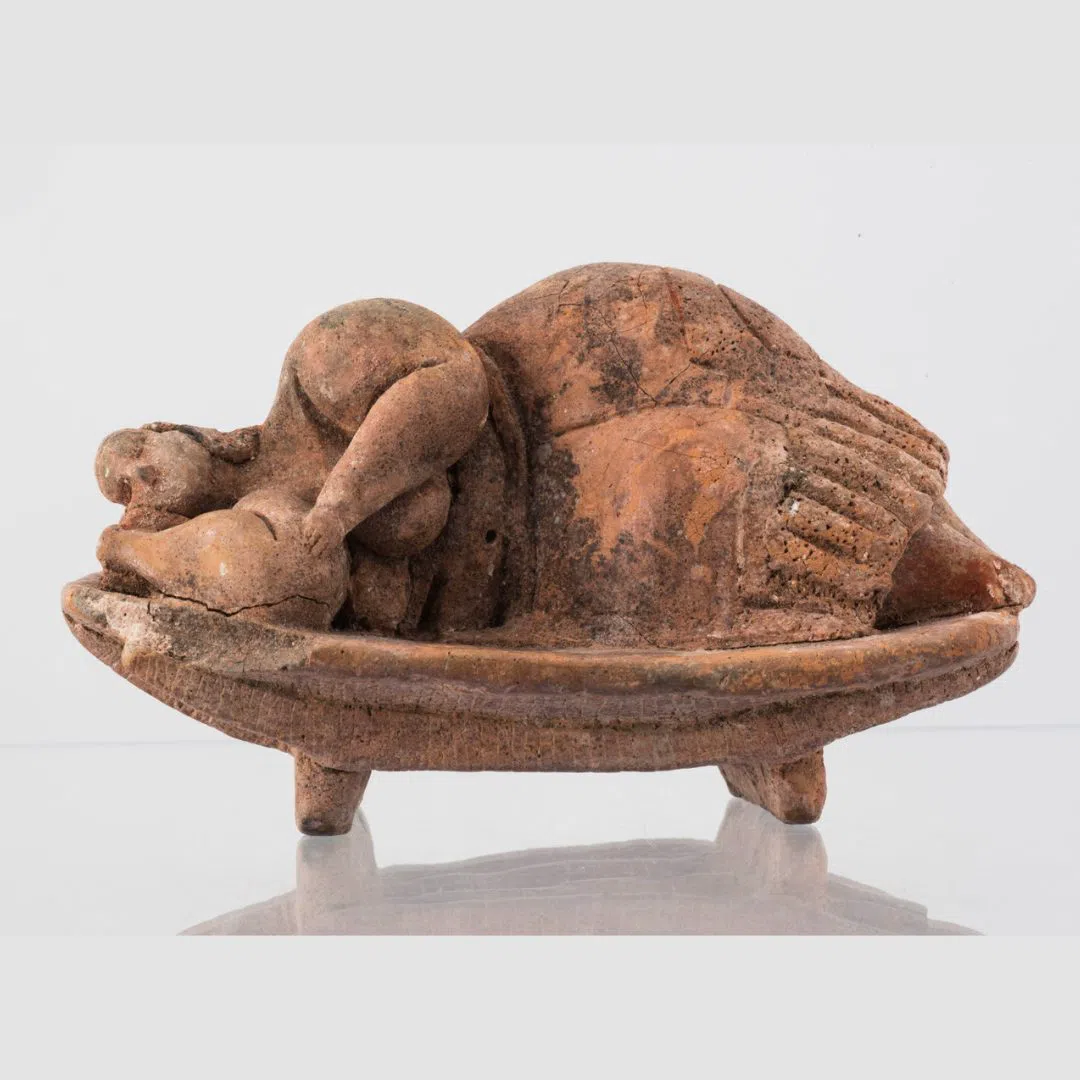
If the palace leaves you wanting context rather than more gilt, the National Museum of Archaeology (Republic Street, five minutes down) is the cheapest serious museum in the city at €5 for adults, €3.50 for youth, students and seniors, and €2.50 for children 6 to 11. Its temple-period material is what makes the knights' story upstairs at the palace feel recent rather than ancient. The rooms are compact, so large groups split.
Casa Rocca Piccola is the counterweight. It is a private palace of the same period on the same street grid, still lived in by the de Piro family, and the 45-minute live guided tours run hourly on the hour in English, daily 10:00 to 16:00 except Sundays, at around €15 for adults with a child discount. It answers what it was like to live in one of these houses in a way the state rooms cannot. Book ahead, and note it occasionally closes for family events.
If the Armoury left you wanting more hardware, Fort St Elmo & the National War Museum (at the tip of the peninsula, ten minutes' walk) costs €10 for adults, €7.50 for youth, students and seniors, and €5.50 for children 6 to 11. The ramparts are open and weather-exposed. The In Guardia re-enactment runs on selected Sundays from 18 October to 31 December 2026, with a combined ticket at €17 for adults, and the fort opens at noon on those days.
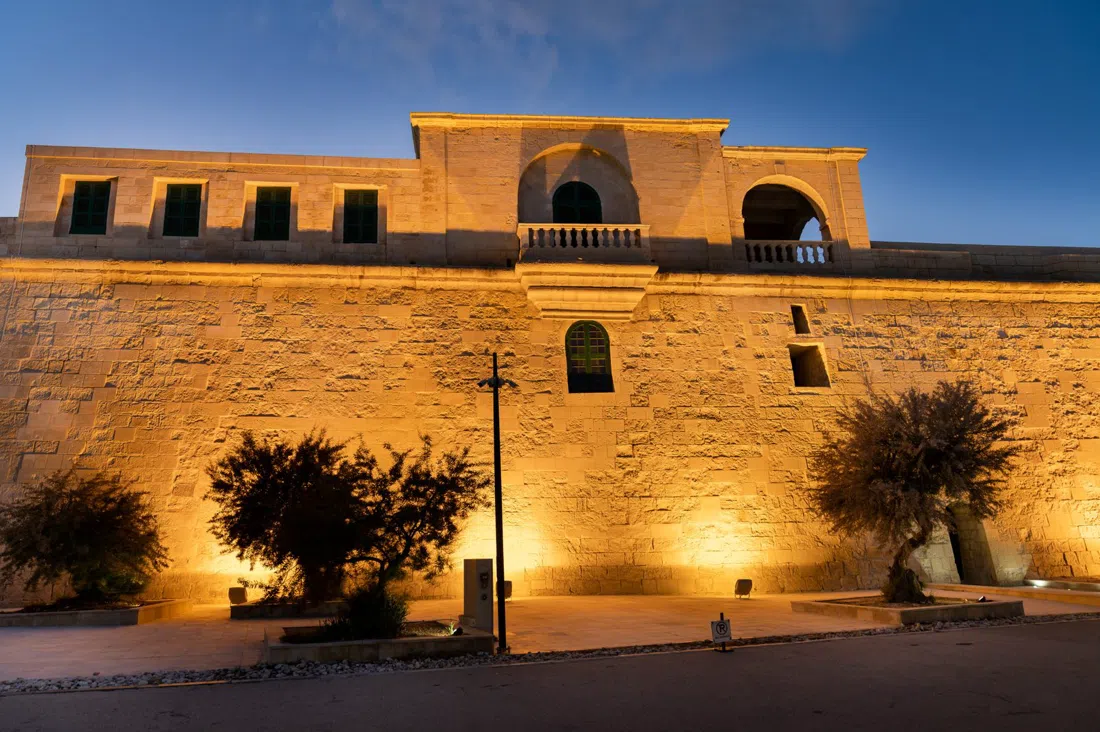
For heat or rain, MUŻA — National Museum of Art (in another of the Order's auberges, a short walk from the square) holds the national collection from the 15th to the 21st century. Adults pay €10, youth, students and seniors €7.50, children 6 to 11 €5.50, and it runs daily 10:00 to 18:00 from March to October, closing on Tuesdays only in January and February. It shut briefly during the island-wide power cuts in July 2026, so a same-day check does no harm.
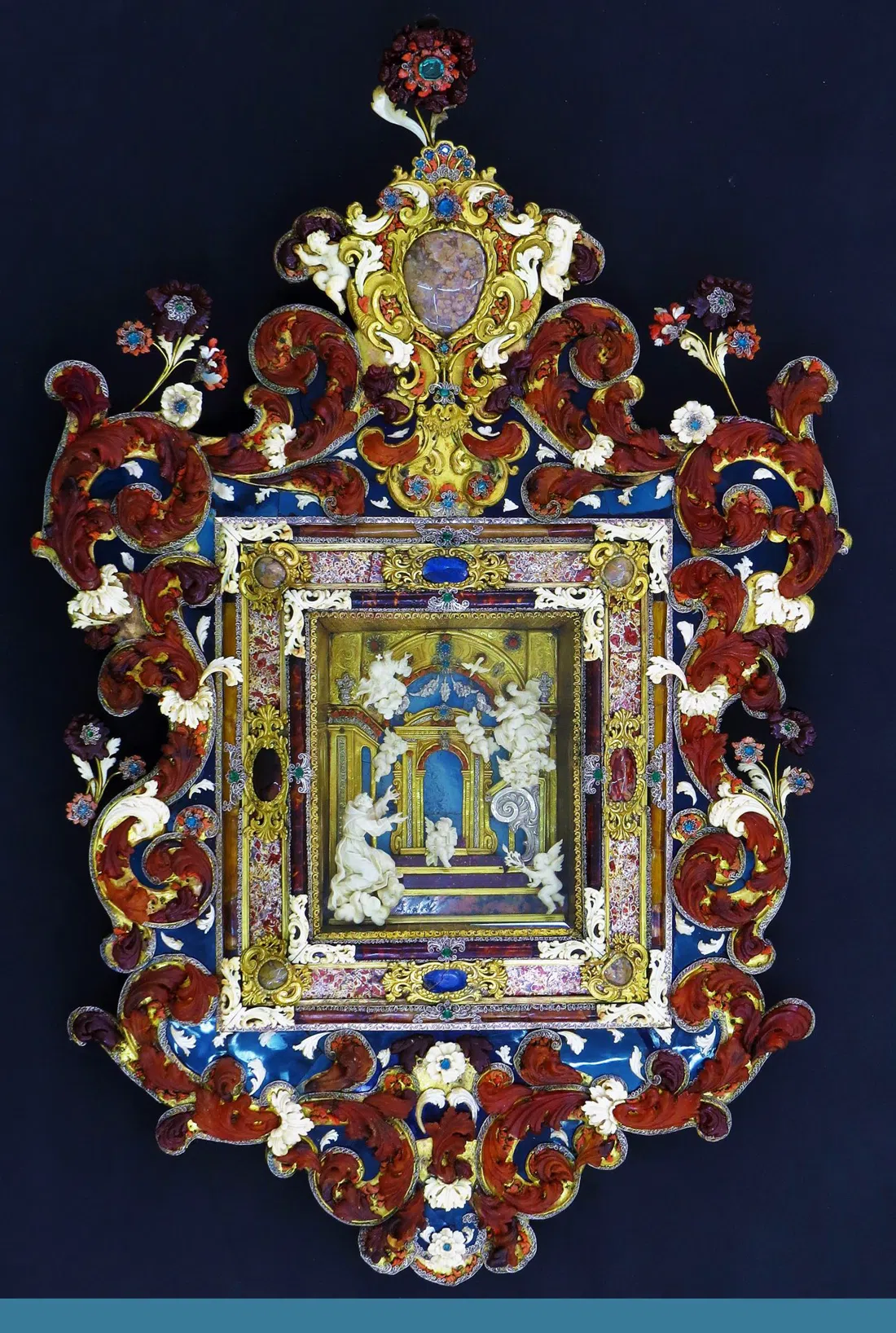
Lascaris War Rooms is the most atmospheric paid site near the palace and the priciest: €20 for adults 16 and over, €19 for seniors, €7 for children 5 to 15, and €35 for a family, open Monday to Saturday 09:30 to 17:30 with a guided tour included. The site is cashless and takes cards only, so do not arrive with euro notes and no plastic.
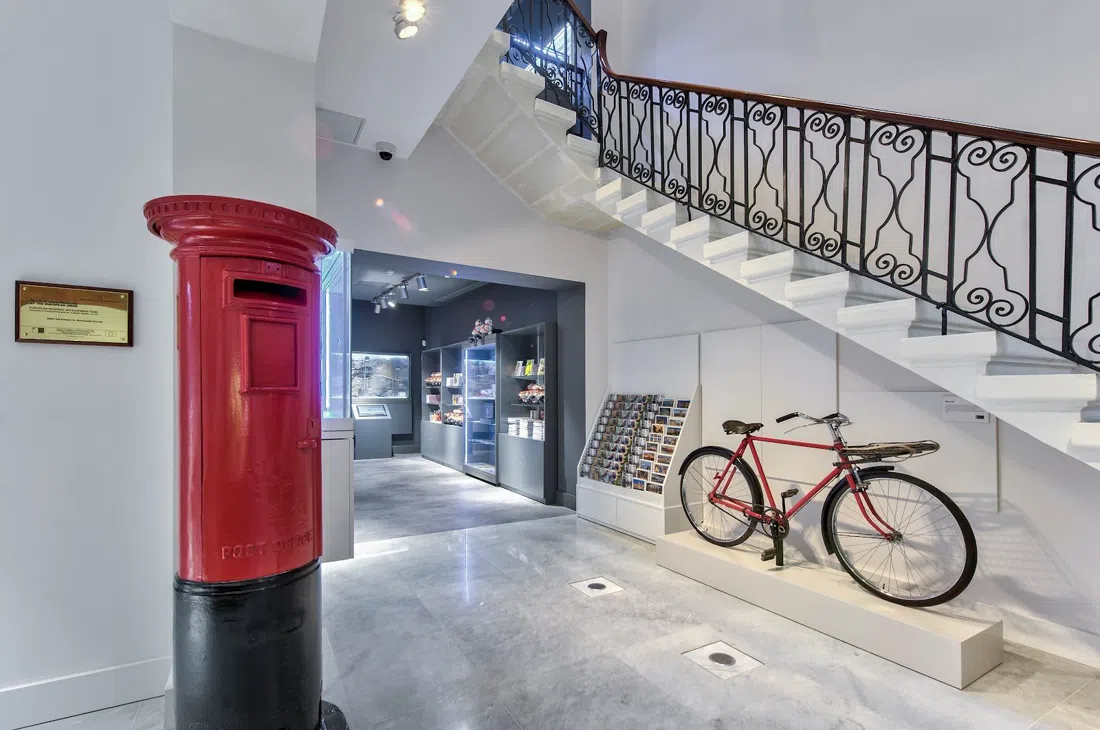
Two smaller stops. Teatru Manoel (Old Theatre Street, three minutes away) was built in 1731 by a Grand Master as a public theatre, and it is the clearest evidence that the Order built for pleasure as well as war; guided tours run Tuesday to Sunday, roughly 10:00 to 17:00, for a low single-figure fee, but access depends on rehearsals so check the day's schedule. Malta Postal Museum & Arts Hub (two minutes from the palace) is a 30-minute filler for a hot afternoon or a shower, open Monday to Friday 10:00 to 16:00 and Saturday 10:00 to 14:00, closed Sunday, with rotating shows: Emvin Cremona and Richard Ellis's early postal photography are listed from 24 September to 1 November 2026. Private events can close it, so ring first.

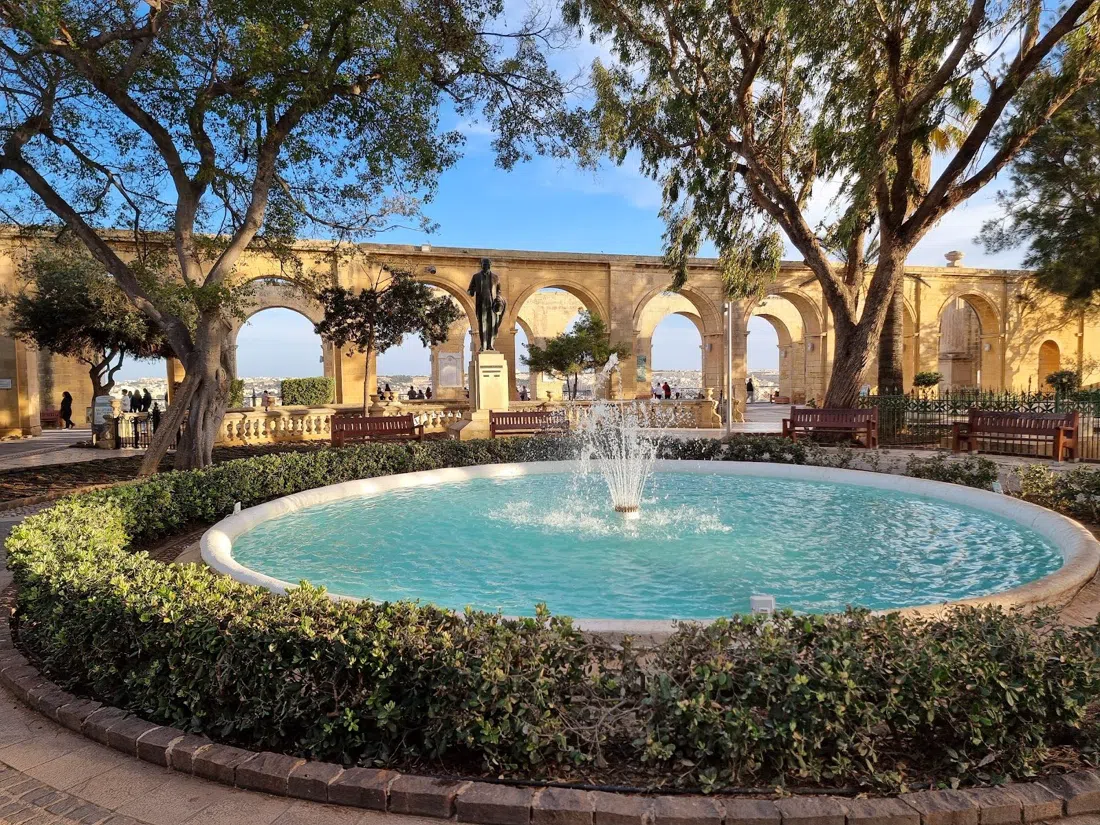
And the free one: Upper Barrakka Gardens (on the bastion above the Grand Harbour), open daily 07:00 to 22:00, is the best thing within walking distance that costs nothing, and the lift down to the harbour quay is how most people arriving by sea come up to the palace on foot.
Where to sit down afterwards
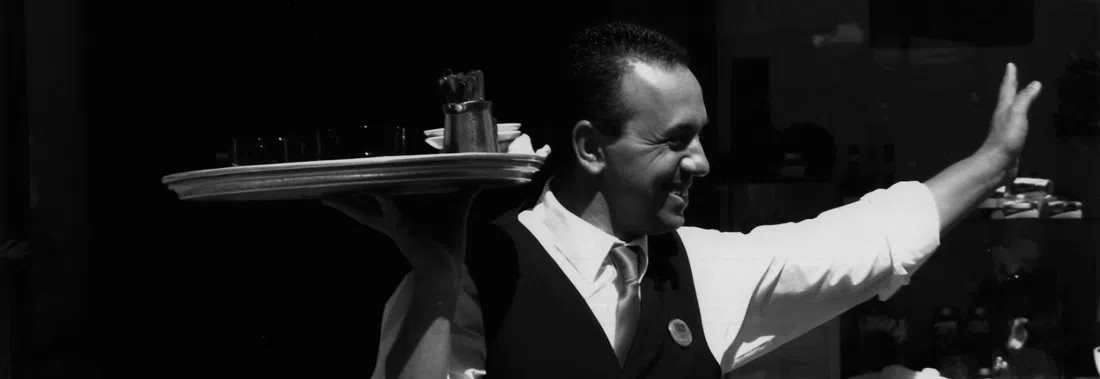
Caffè Cordina (on the square, 90 seconds from the palace door) has been trading since 1837 and is the obvious answer. The big outdoor terrace absorbs groups without booking and runs table service; inside is counter service, and the vaulted interior is the part actually worth seeing, so do not take the terrace by default. Coffee and a pastizz or a cake, light lunches, inexpensive.
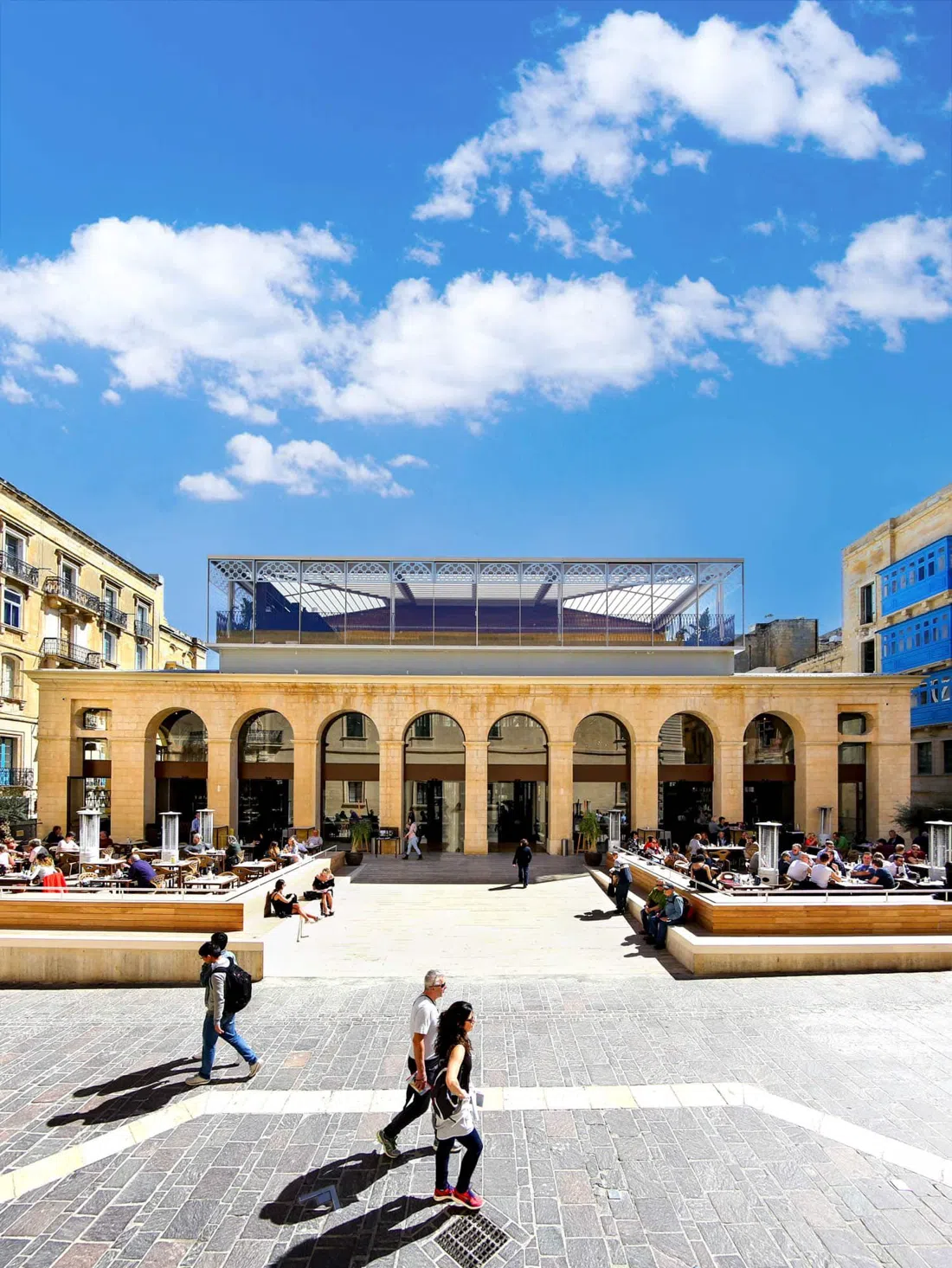
For a group lunch, Is-Suq tal-Belt (Merchants Street, five minutes away) is the practical choice: a food hall open seven days with counters and shared tables, no booking, late hours to 22:00 and 00:30 on Fridays and Saturdays. Everyone picks a different counter and nobody waits on one kitchen, which is what six people with six opinions need.
For a proper sit-down Maltese meal, Rubino (Old Bakery Street) has been trading since 1906 and has only around 45 covers across three floors. Book. Small private groups are fine, coach parties are not. Lunch runs 12:30 to 14:30, dinner Tuesday to Saturday, and it is closed on Sundays, which is precisely the day most day-trippers go looking for it.

If you are staying into the evening, The Bridge Bar (by the bridge steps below the theatre quarter) opens Tuesday to Saturday, 19:00 to midnight. The Friday jazz sessions run weekly from May to the end of November, drinks are reasonably priced, and the seating is literally the staircase, with almost no tables. Arrive very early on a Friday if you want to sit.
Is it worth it
Yes, at €12, with one qualification. If you go on a selected Wednesday morning and get only the Armoury, or if the Throne Room was the room you came for, you will feel short-changed, so check before you leave. Do it on a normal day with ninety minutes to spare and it is the best-value major site in the city, and the nine rooms added in 2025 make it a substantially fuller visit than the one older guidebooks describe.
It suits anyone with an interest in how a small, odd, military-religious state actually governed. Families do reasonably well out of it, mostly on the strength of the Armoury, and photographers less well than they expect, because the state rooms are dim. It does not suit a party of thirty on a tight coach schedule, however willing the site is to take them.
Practical notes for a day out from St Julian's
Buses leave St Julian's for the capital's terminus, just outside the city gate, throughout the day; check the route number at the stop rather than trusting an old printout, and allow about half an hour in normal traffic and rather longer at the morning and evening peaks. From the terminus it is a flat ten-minute walk up Republic Street to the palace, or a slight detour through the Upper Barrakka if you want the harbour view first. Coming back after the jazz, check the last departure before you order the second drink.
Everything here is priced in euro. Cards are accepted almost everywhere and Lascaris takes nothing else, but keep €20 or so in cash for the small museums and a café round. Budget roughly €45 to €50 a head for the palace, the Co-Cathedral and a decent lunch; add €20 if you want the war rooms, or nothing at all if the gardens and the square are enough, which for some people they are.
For where to base yourself before the trip in, see the St Julian's hotel search, and the St Julian's guide covers the rest of what is walkable once you are back.