The St Julian's issue
Getting Around St Julian's When the Coast Road Jams
Two rush hours clog St Julian's every day. This is the walk, the bus numbers and the five-minute ferry crossing that get you round them.

By Callum ReidThe parts of St Julian's worth the walk.
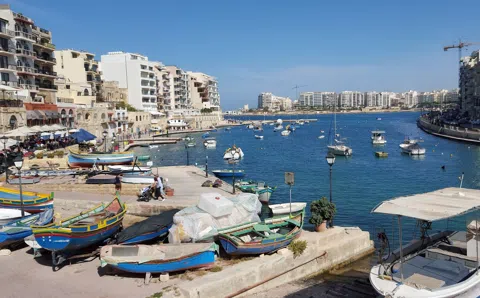
Stand above Spinola Bay at half past five on a weekday and the problem explains itself. Cars sit nose to tail along the coast road, a bus waits to pull out of a stop it cannot leave, and a couple walking the promenade overtakes the lot of them at an ordinary pace. Traffic here is a fixed feature of the mornings and the late afternoons rather than a bad week or a spell of roadworks, and the town becomes straightforward the moment you plan around it rather than through it.
The hours that decide everything
Two windows matter. Between 07:30 and 09:00, and again between 16:00 and 18:00, the roads in and out of St Julian's slow to a crawl, and nothing on wheels is exempt. A taxi you paid €25 for and a €2 bus ticket buy you the same view of the same stationary bumper. Outside those windows the same journeys behave normally: the airport run that takes fifty minutes at eight in the morning takes twenty-five at eleven. If you can move a departure by forty minutes in either direction, do that before anything else. It is worth more than any clever choice of vehicle.
St Julian's is also compact. St George's Bay, Paceville, Spinola Bay and Balluta Bay run into one another along a single seafront, and the distances people instinctively drive here are distances you can walk in less time than it takes to find a parking space. The St Julian's guide covers what sits along that strip. This piece is about moving along it, and about getting off it when you need to.
Plan your St Julian's trip
Live prices from our booking partners.
Free cancellation on many rooms. We may earn a commission when you book.
Walking the seafront
The Sliema–St Julian's Waterfront Promenade (Spinola Bay through Balluta and on along the water) is free, unrestricted and the one route traffic cannot touch. Spinola Bay to Balluta is ten to fifteen minutes on foot. Carry on and you reach the Sliema ferry quay in around forty-five minutes. It is almost entirely flat, it is lit, and it is lined with places to stop, so a slow group can take it without anyone feeling hurried.
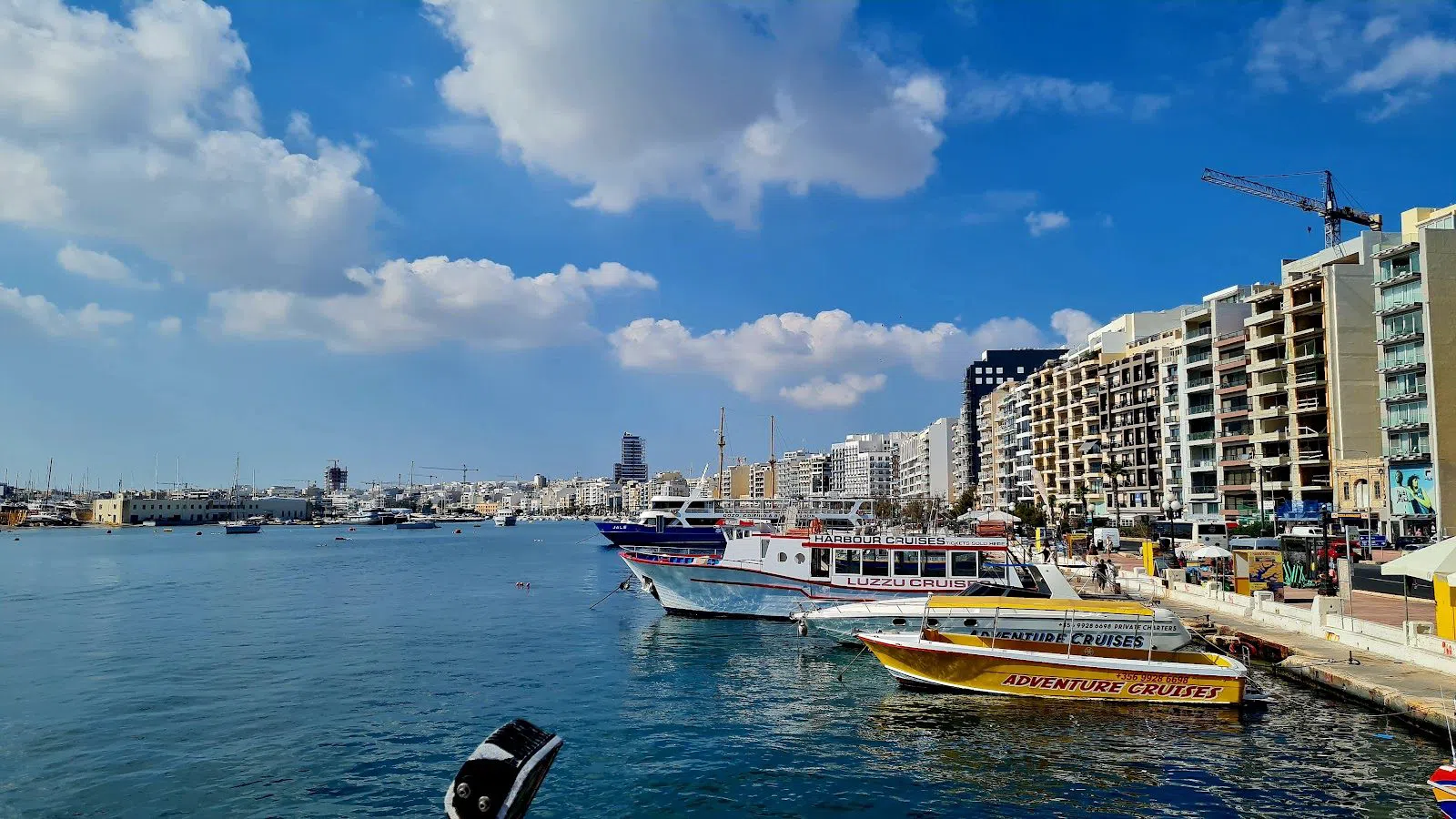
A party of eight trying to move between bars on the coast road at nine in the evening will wait for two taxis, split across two cars, and reconvene twenty minutes later having spent €30. The same eight people walk it together and arrive at the same time. For any journey inside St Julian's, and for the Sliema crossing at rush hour, walking beats anything you could have hailed.
This is worth weighing when you choose a room. Most of what people book here sits within a few minutes of the promenade, and a hotel on the water is a hotel you never need a car from. Check the St Julian's hotel search with that in mind rather than picking on price alone and discovering you are a hill and a dual carriageway from the seafront.
What the buses actually do
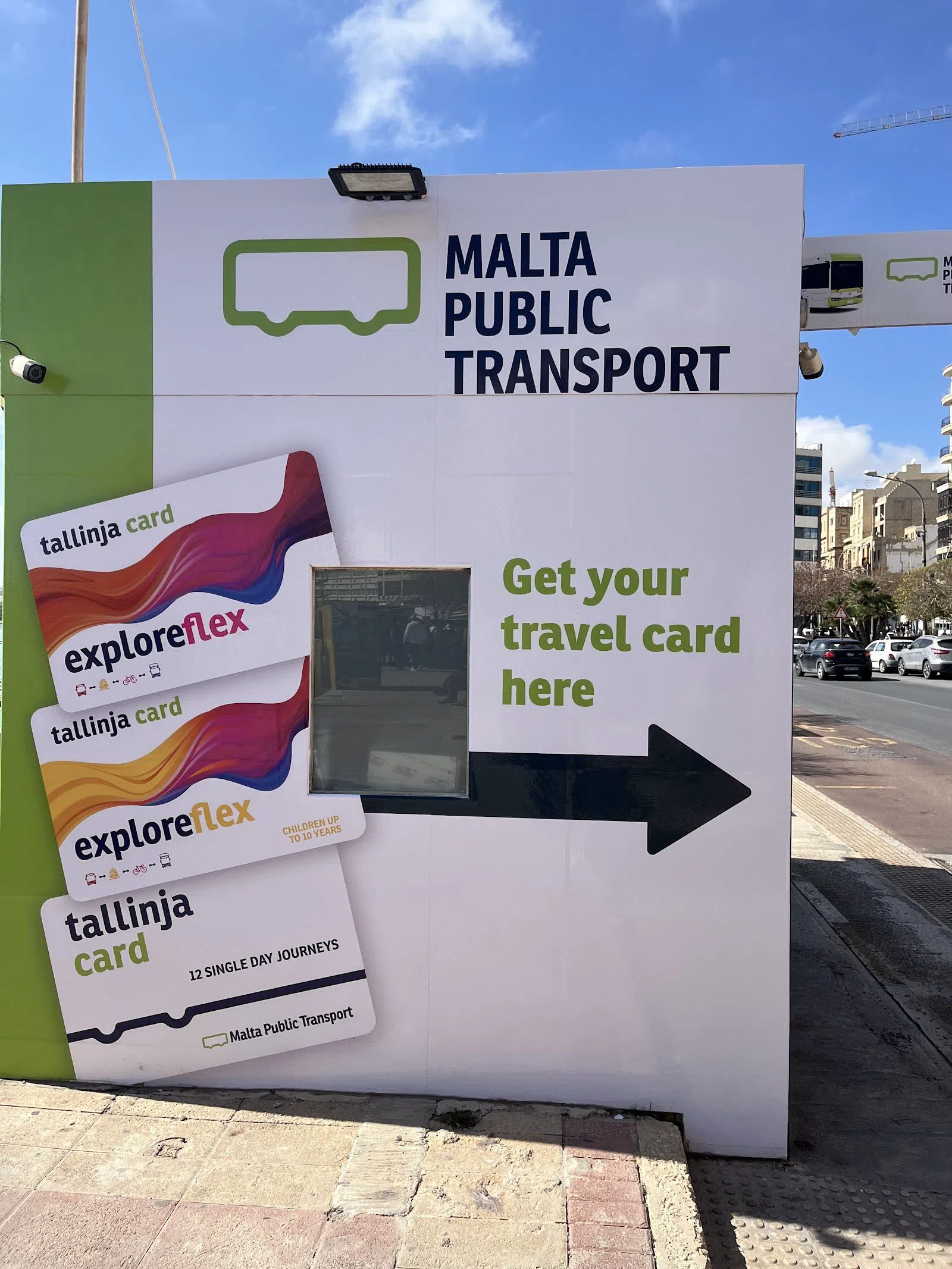
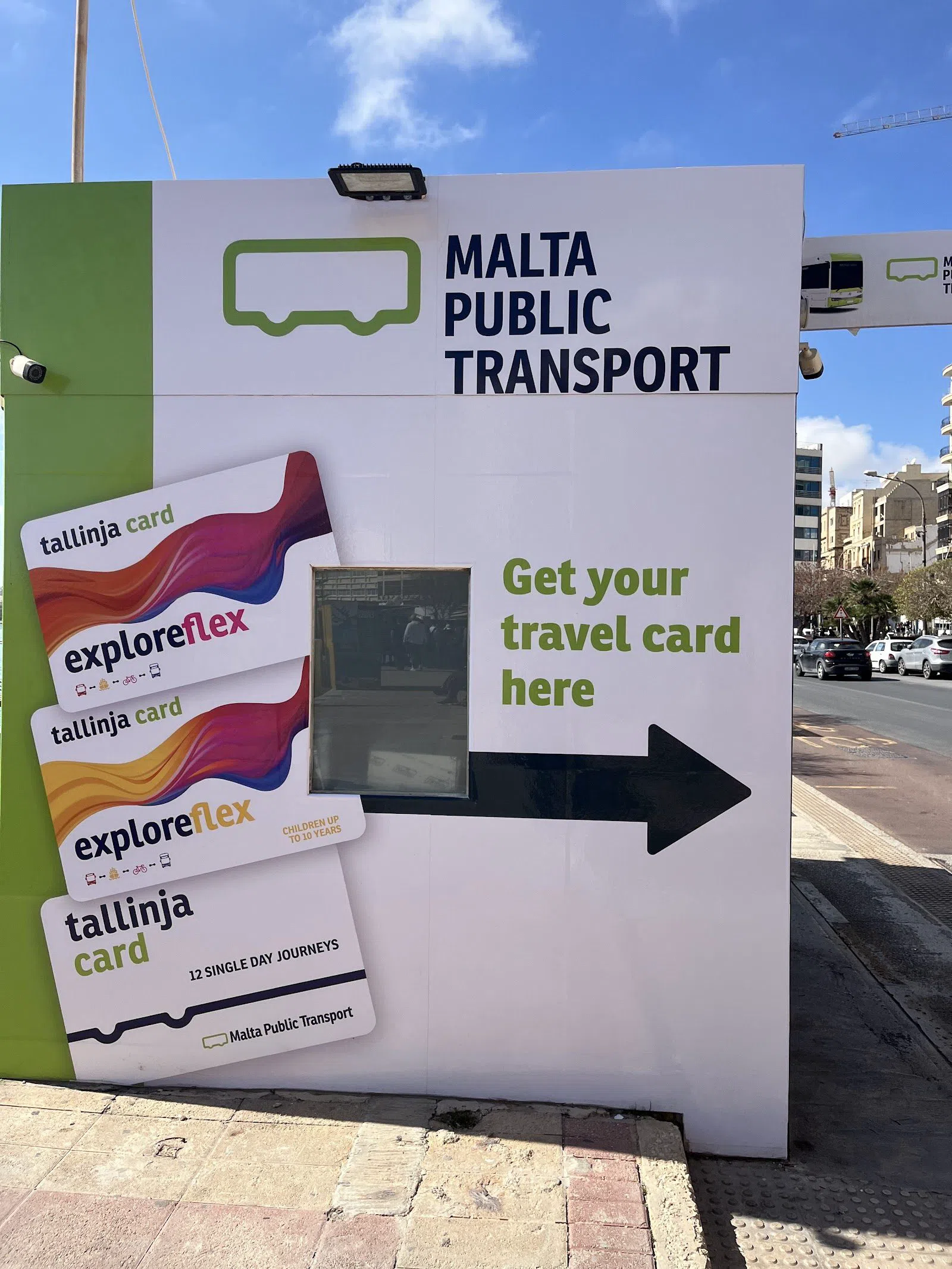
Malta Public Transport (tallinja, the island-wide network) is the backbone, and the numbers you want in St Julian's are 13, 14, 16, 21, 22, 202, 203, 212 and 225. Between them they cover the coast road, the inland routes and the trip into the capital. A single fare is €2 in winter and €2.50 in summer. Night routes and the tallinja Direct services are €3, with the TD1 at €3.50. If you are here a week and using buses daily, the Explore card is €25 for an adult and €7 for a child over seven days, and the Explore Flex version is €27. Read the small print on both: the Explore card does not cover tallinja Direct, so you pay for a Direct journey separately on top.
The TD2 airport express runs every 30 minutes from 05:00 to 00:30, has proper luggage space and USB sockets, and costs a fraction of a taxi. Outside the two congestion windows it is the sensible way to and from the airport.
Buses have no advantage in traffic. They sit in the same queue as the cars between 07:30 and 09:00 and between 16:00 and 18:00, and a timetabled departure means little when the road is full. Group size is the other problem. There is no booking and no limit, but a group of six will rarely board together at a Paceville stop on a summer evening, because the bus arrives with standing room for two. Split into pairs, agree where you are getting off, or travel off-peak.
Crossing the water instead of the road
Valletta Ferry Services (from the Sliema quay at the far end of the promenade) crosses the harbour in about five minutes, against forty or more by car at the wrong hour. Boats run roughly every fifteen minutes from 06:45, until 01:30 in summer and 19:30 in winter. It is walk-on with no booking and no group cap, so a party of twelve simply gets on, and you pay on board by card or cash. A day single is €3.00 and a return €5.00; night sailings are €3.50 and €5.20; children are €1.00 single.
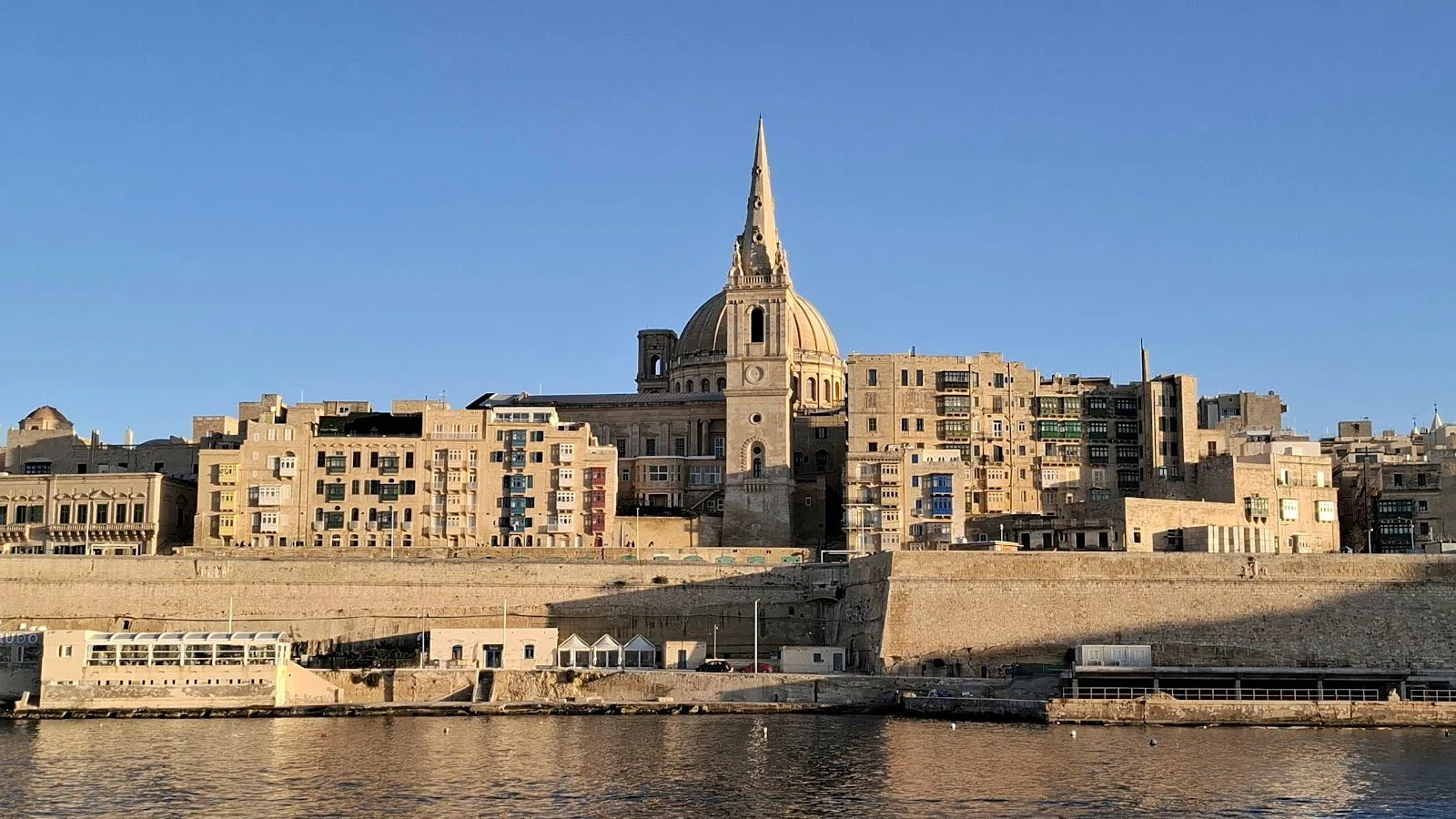
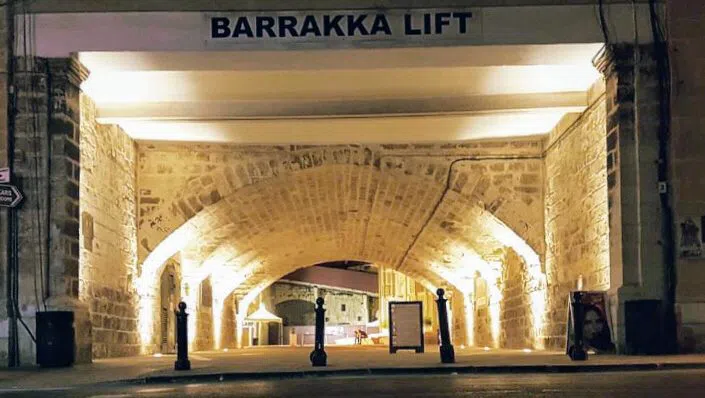
The crossing lands you at the bottom of the bastions, which used to mean a hard climb. The Upper Barrakka Lift (harbour side of the capital) removes it: 25 seconds up, €1 single or €1.50 return, walk-up with no booking, and the car takes a tour group in one or two loads. The same operator's Valletta to Cospicua boat includes a free lift ticket in the fare, a small piece of joined-up thinking on a route that is already cheap.
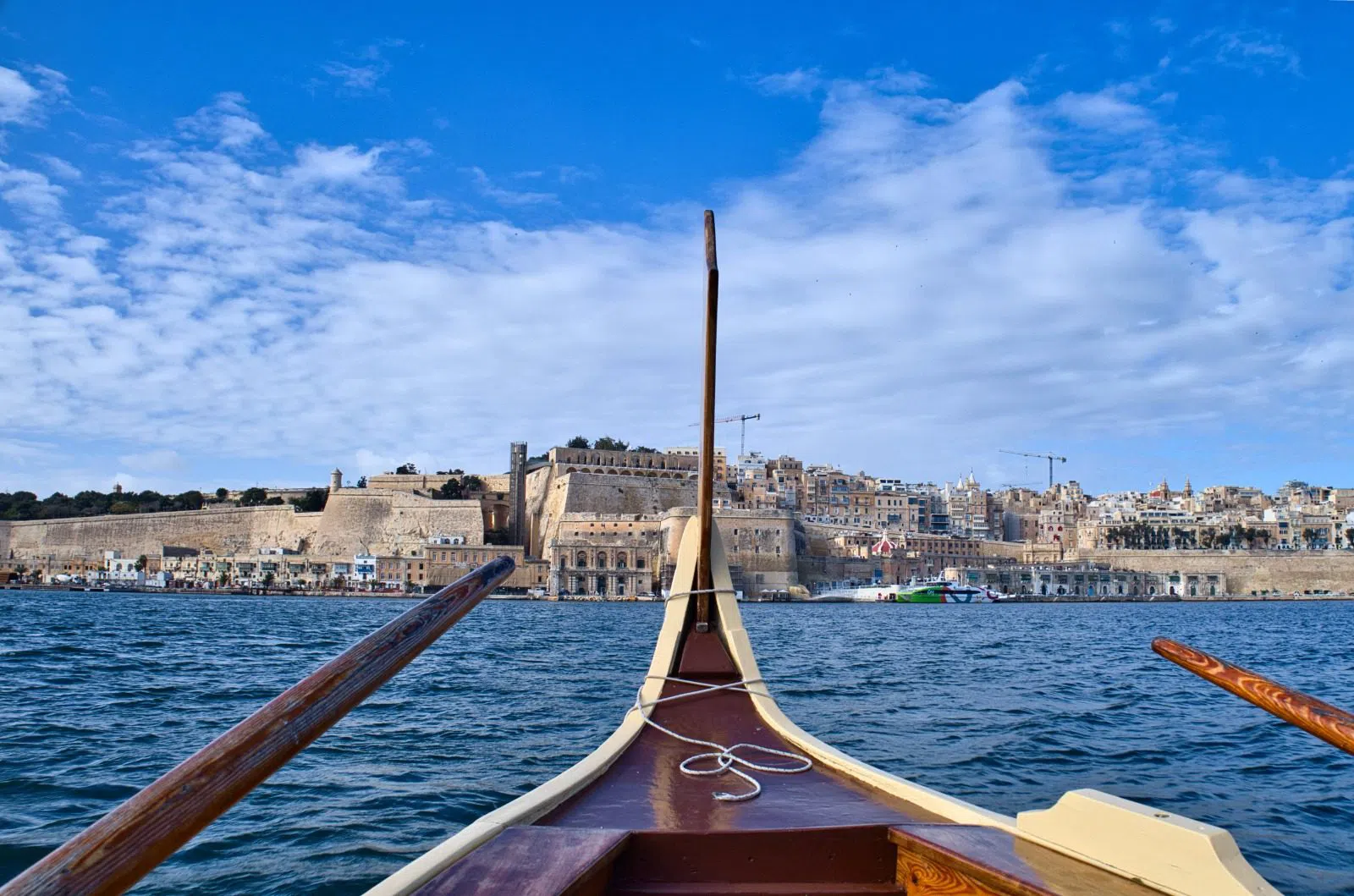
For the harbour itself there is a slower option. Grand Harbour Tours run the traditional dgħajsa water taxis out of Cospicua, on demand rather than to a timetable. The skipper leaves when he has a few passengers, you pay him in cash, and a crossing costs roughly €2 to €3 a head. Charters and harbour circuits cost more. The boats are small: a group of ten needs two of them, or a call ahead to the boatmen's co-operative. The payoff is that it lands you at Birgu closer to the Maritime Museum than the scheduled ferry manages.
Gozo without the drive north
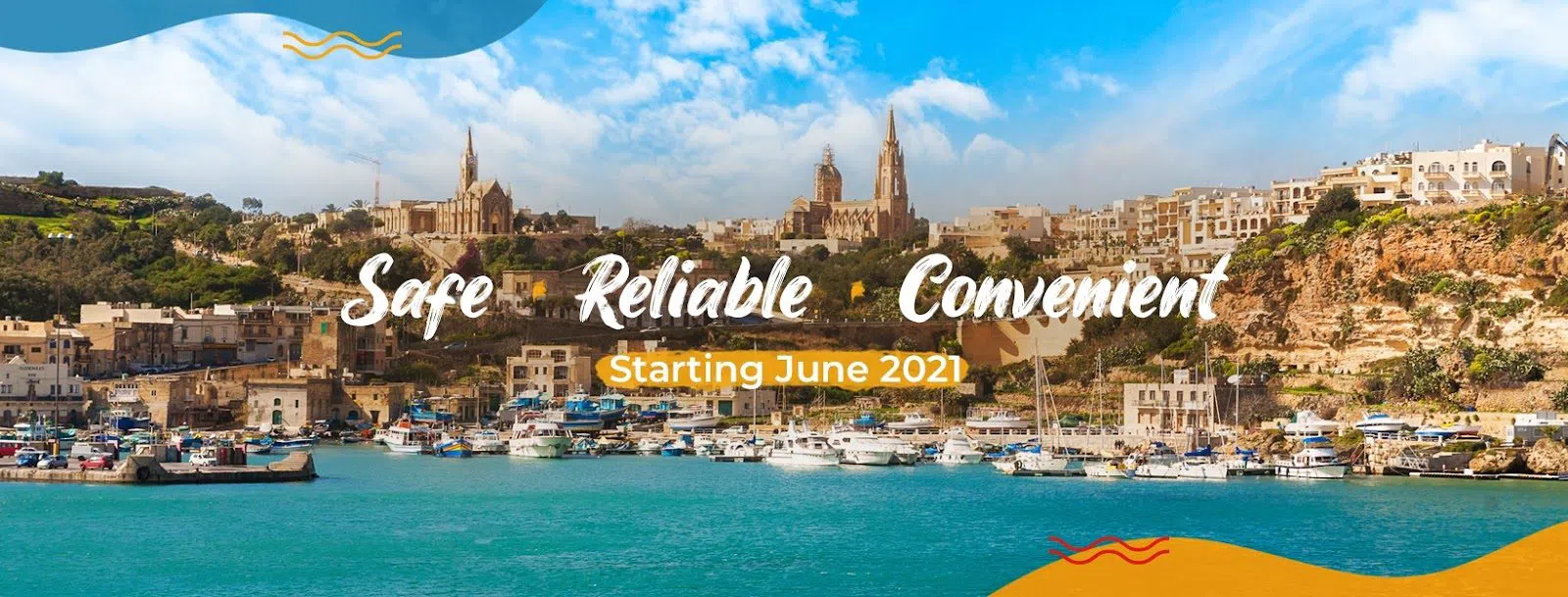
Getting to Gozo used to start with a 45-minute road slog north to Ċirkewwa, exactly the kind of trip that doubles in the wrong hour. Since 5 May 2026, Gozo Highspeed has run a boat from the Sliema ferry quay itself: about 75 minutes direct, or 30 minutes if you join it further up the coast at Buġibba. Sliema to Gozo is €8.50 one way, Buġibba to Gozo €6.50, and the sailing from the capital to Mġarr starts at €7.50. Children aged four to ten pay roughly half. It takes foot passengers and bicycles only, no cars, and groups are fine, though book online in advance for summer, because the popular departures sell out.
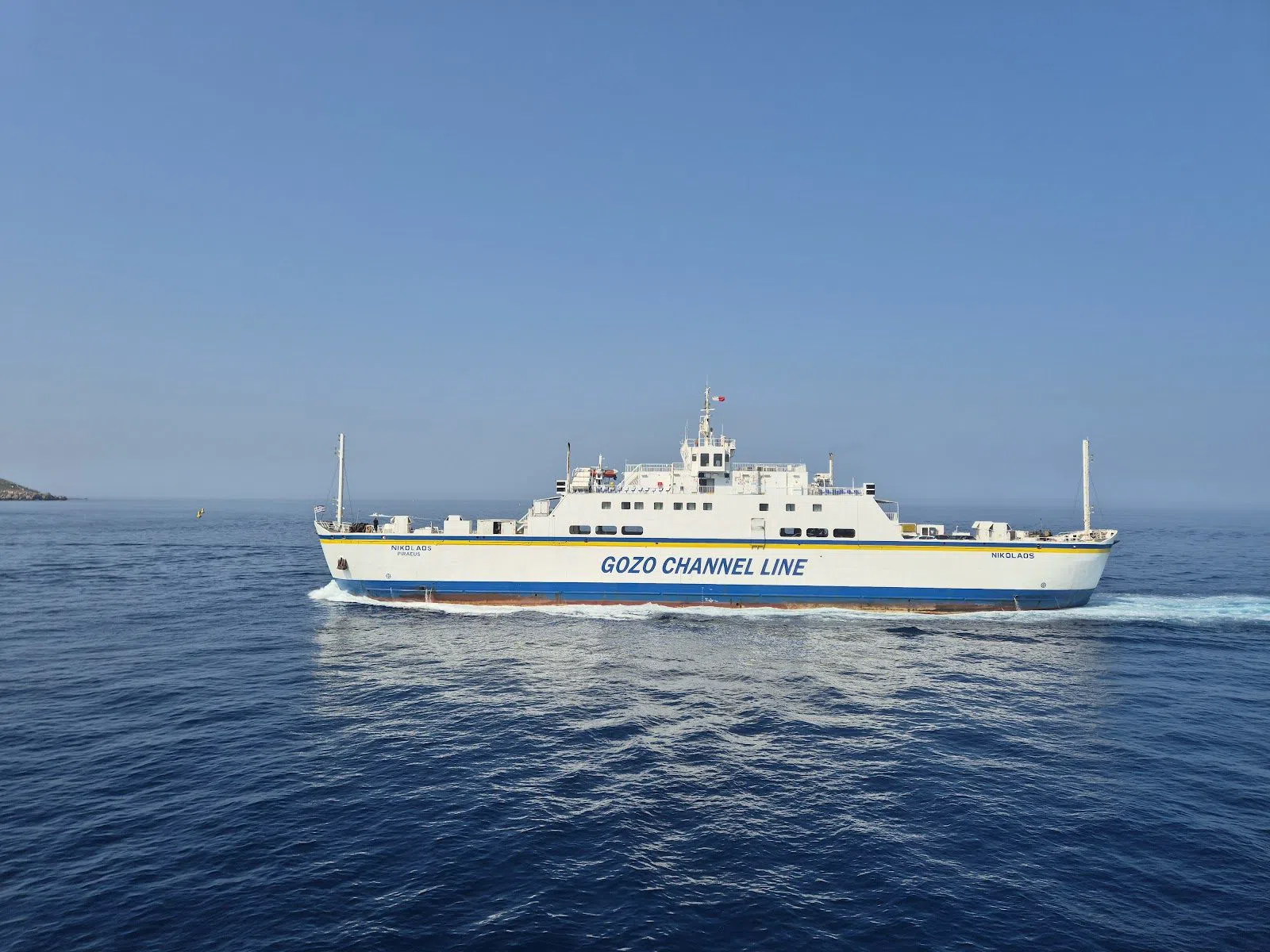
If you have hired a car, Gozo Channel Line (Ċirkewwa, at the northern tip) is the only way to take it across. The crossing is 25 minutes, the service runs 24 hours a day year-round, and boarding is open-deck with no reservation; coaches and minibuses queue in the same vehicle lanes. A foot passenger pays €4.65 return, a car and driver €15.70, a motorcycle and rider €8.15, and you pay on the Gozo side on the way back. Without a car of your own it is hard to justify, since reaching the terminal from St Julian's means the whole northern road in both directions.
Taxis, apps and the early flight
Three options, and they do different jobs. eCabs (Maltese-owned, operating since 2009) is the one to use when the journey has to happen at a fixed time: it has a 24/7 call centre and lets you pre-book a slot rather than hoping a driver appears. That is what you want for a 05:00 flight, the one journey where an app that cannot find a car ruins the day. Fares are metered and broadly level with the competition, fixed airport transfers run around €20 to €30 to St Julian's, minivans and mobility-adapted vehicles are bookable, and one ride can take up to four extra stops, which helps when a group is spread across three hotels.

Uber has been in Malta since 2022 and concentrates on the areas visitors actually use: St Julian's, Sliema, the capital and the airport. An UberX for a short hop down to Sliema runs roughly €8 to €12. UberXL and Comfort seat up to eight, though the larger cars are thinner on the ground than you might expect, and the fleet thins out quickly once you leave the tourist strip. Treat it as the third quote to check when the other two are surging.
The fallback is the Paceville Authorised Taxi Booth (the white taxi rank in the centre of Paceville), one of only four authorised booths on the island alongside the airport, the cruise port and the capital's bus station. You pay at the kiosk at a government-set zone fare, hand the receipt to the driver, and the price cannot move afterwards. The airport is around €20. Each car takes four, and there are usually several waiting, so a group of eight takes two cars at the same fixed rate. At three in the morning, when app pricing in Paceville is at its least friendly, this is the thing that saves you money.
Renting something small

A scooter does slip past the queues on the coast road, and it parks where a car cannot. ST Rentals Malta keeps over 200 vehicles including vans, so a group can take several scooters or share one van, and a 50cc costs roughly €25 to €40 a day, more for larger bikes and cars. You need to be 18 for a 50cc and 21 for most cars, and booking online is cheaper than walking in. They are open daily 09:00 to 16:30. Two warnings: Maltese driving is assertive and this is not the place to learn, and shared e-scooters were banned nationwide in 2024, so no app will rent you one.
For pedal power, The Cyclist (one village inland from St Julian's) is the nearest serious rental operation. Mountain bikes start at €15 a day, e-bikes at €25 and road bikes at €30. Every renter needs ID and a €100 cash deposit, pick-up is from 09:00 and bikes are back by 18:30. Every bike is serviced before it goes out and road hires come with a pump, tube and levers. The e-bikes deal with Malta's hills, which are short but steep enough to end an afternoon early.

Two ways to see the island without a road decision
City Sightseeing Malta (stops at St George's Bay, the Westin Dragonara and Spinola Bay) does one thing well: the sweep out to the old capital and back in a single sitting, without you making any navigational decisions. Buses leave roughly every 30 minutes, a 24-hour pass costs from about €30, and the ticket stays redeemable for 12 months. No booking is needed and there is no group cap, and if you do book, cancellation is free up to 24 hours ahead. It runs year-round apart from Christmas Day. One current gap: Stop 3 at Buġibba Jetty has been closed for roadworks since May 2026.
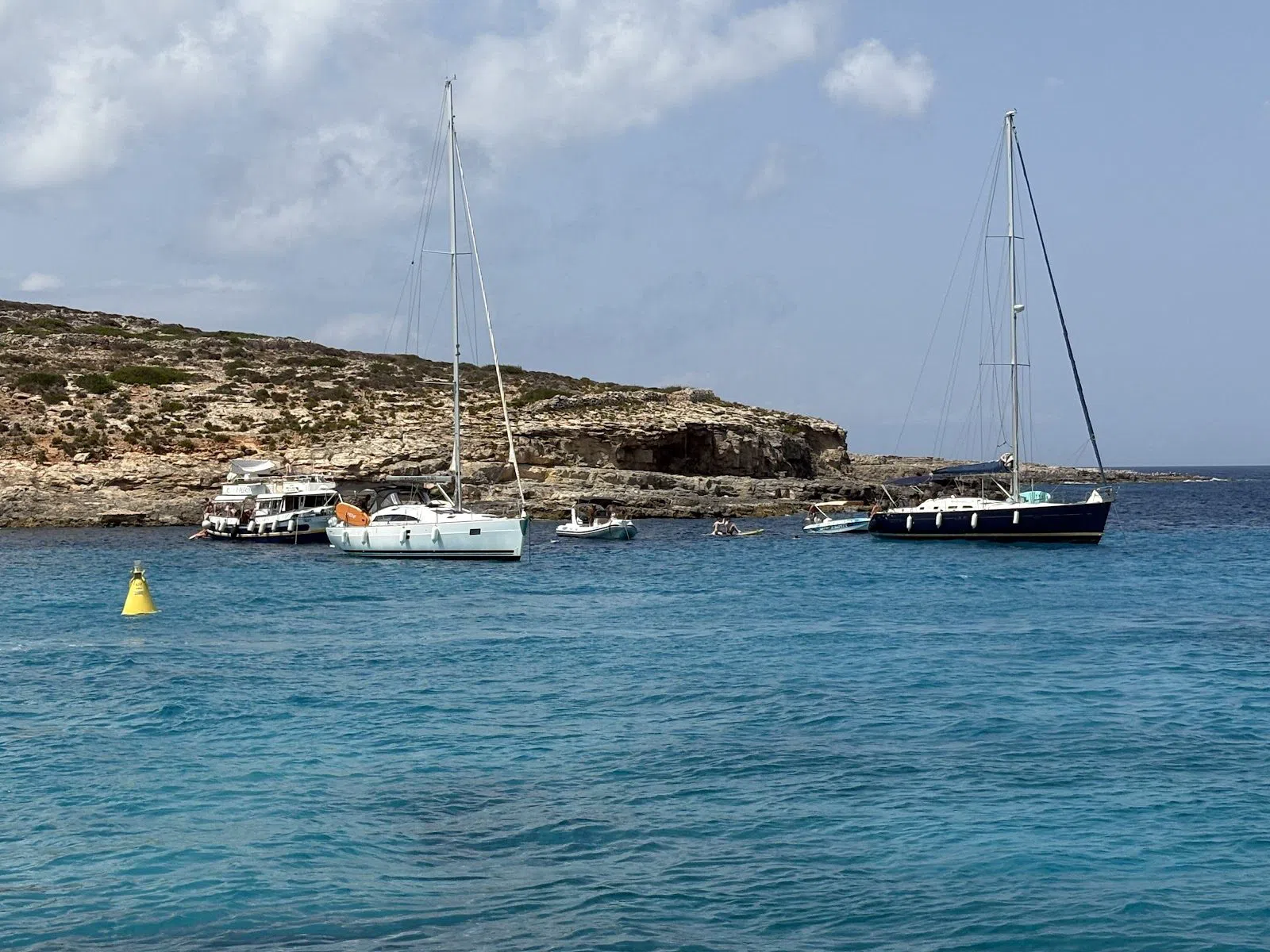
Captain Morgan Cruises has operated from the Sliema quay for forty years, a fifteen-minute walk from Spinola Bay, and runs Grand and Marsamxett harbour circuits plus Blue Lagoon and Gozo days. A harbour cruise costs around €25 to €30 and an island day trip €35 to €45. Scheduled sailings take large parties without fuss and whole-boat charters are standard, which makes it the easier choice for a group that would otherwise need three taxis. It is also a full day spent seeing the coast without touching a road.
Practical notes
Transport. Walk anything inside St Julian's. Take the ferry for the capital. Use the TD2 for the airport outside rush hour, and pre-book eCabs when the time is fixed. Buses 13, 14, 16, 21, 22, 202, 203, 212 and 225 cover most of what else you will want.
Cash. Ferries take card or cash, and the taxi booth is prepaid at the kiosk. Carry coins for the dgħajsa, which is cash only, and €100 in notes if you are hiring a bike, since the deposit is cash.
Timing. Avoid 07:30 to 09:00 and 16:00 to 18:00 for anything with a deadline. The last Sliema ferry is 01:30 in summer and 19:30 in winter, so check which one applies before you plan an evening on the far side of the harbour.
Budget. A bus single is €2 to €2.50 and a week's Explore card €25. The ferry is €3.00 single, €5.00 return. A short ride-hail hop is €8 to €12 and the fixed airport fare around €20. Two people using ferries, buses and their feet will spend under €10 a day on transport; the same pair taking cars everywhere will spend that before breakfast.
Before you go
What is the fastest way from St Julian's to the capital?
Walk the promenade to the Sliema quay, about 45 minutes and flat, then take the Valletta Ferry Services crossing. It is about five minutes on the water against forty or more by road at rush hour. Boats run roughly every 15 minutes from 06:45, until 01:30 in summer and 19:30 in winter, and cost €3.00 single or €5.00 return by day. The Upper Barrakka Lift at the other end is €1 up.
Are the buses in St Julian's worth using?
Yes, outside the congestion windows. Routes 13, 14, 16, 21, 22, 202, 203, 212 and 225 all touch St Julian's. A single is €2 in winter and €2.50 in summer, and a 7-day Explore card is €25. But buses sit in the same jams as cars between 07:30 and 09:00 and again between 16:00 and 18:00, and a group of six will rarely board together at a Paceville stop in the evening.
How do I get to the airport for an early flight?
Pre-book eCabs for a fixed pick-up time. It has run a 24/7 call centre since 2009 and fixed transfers cost around €20 to €30. That is the one journey where an app failing to find a driver ruins the day. If you are travelling later, the TD2 express runs every 30 minutes from 05:00 to 00:30 with luggage space and USB sockets, and costs a fraction of that.
Can I reach Gozo from St Julian's without driving north?
Since 5 May 2026, Gozo Highspeed has sailed from the Sliema ferry quay for €8.50 one way, about 75 minutes direct or 30 minutes if you join at Buġibba, so you skip the 45-minute road trip to Ċirkewwa. It takes foot passengers and bicycles only, and you should book online in advance for summer sailings. If you need to bring a car, Gozo Channel Line at Ċirkewwa is the only option.
Is it cheaper to take a taxi from the rank or use an app?
It depends on the hour. Ride-hail apps are usually cheaper for a short hop, roughly €8 to €12 from St Julian's to Sliema. The Paceville Authorised Taxi Booth charges government-set zone fares, prepaid at the kiosk, so the price cannot move. At three in the morning, when app pricing in Paceville peaks, the booth is cheaper and more predictable, and two cars take a group of eight at the same rate.